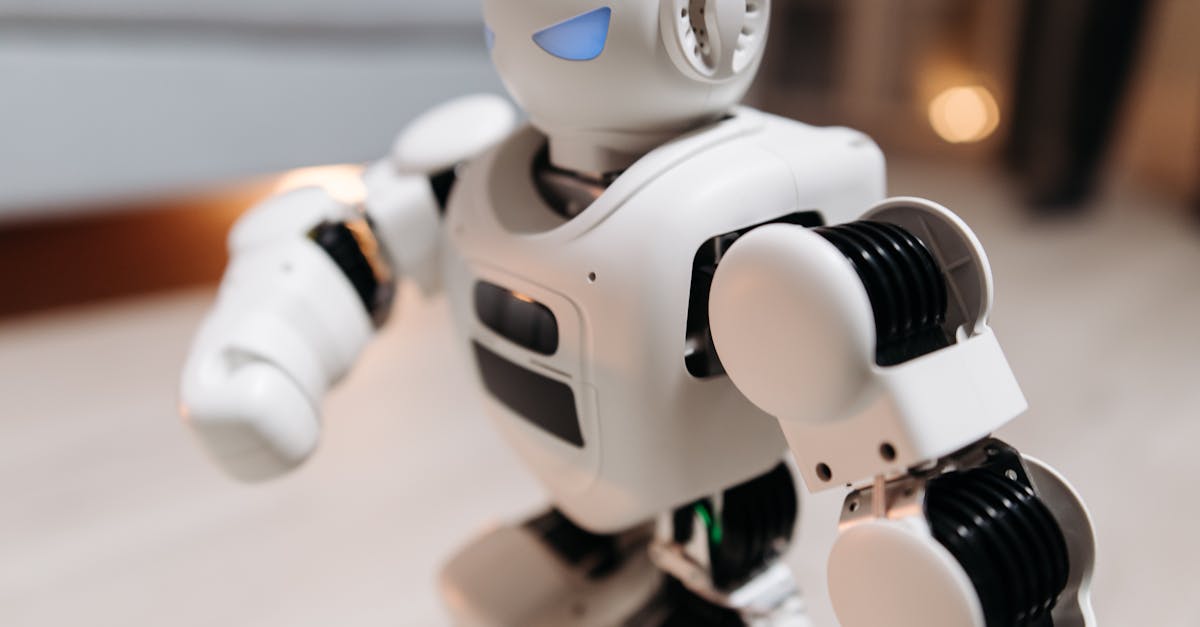
Reinforcement Learning in Humanoid Robotics: Locomotion and Manipulation
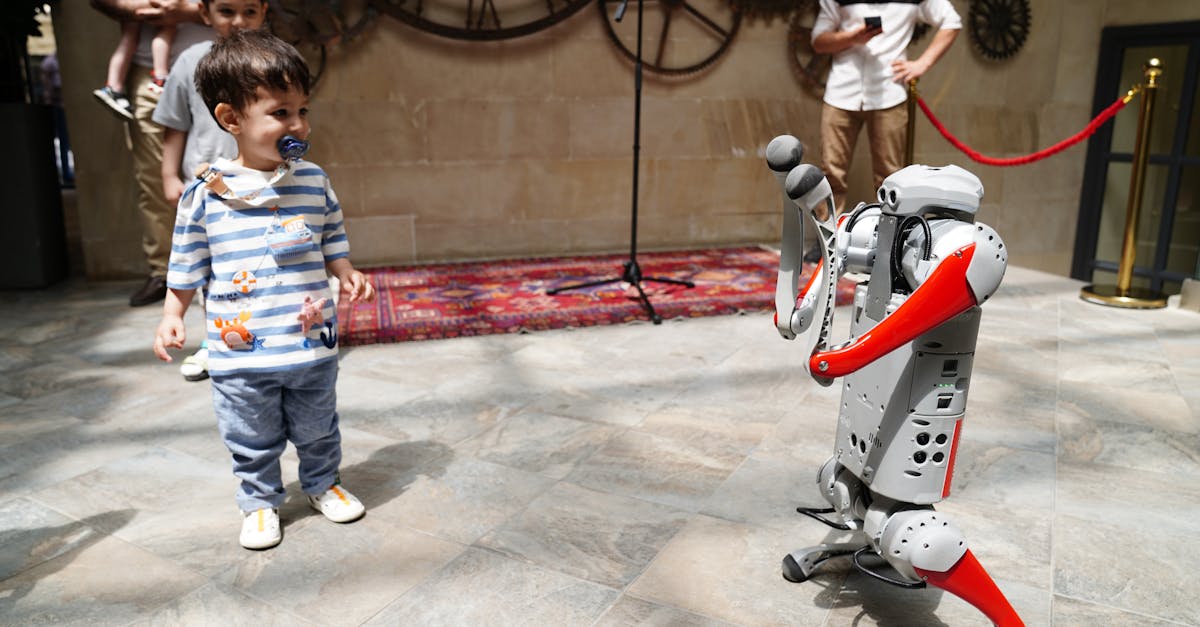
The State of Reinforcement Learning in Robotics
Reinforcement Learning (RL) has transitioned from theoretical research to the backbone of modern robotic autonomy. Unlike supervised learning, which relies on labeled datasets, RL agents learn policies by interacting with an environment and optimizing a reward signal. In humanoid robotics, this manifests as the ability to balance on two feet, navigate complex terrain, and manipulate objects without pre-programmed trajectories for every movement. The critical distinction in current evaluation is between hardware that ships today, systems in pilot deployment, and concepts announced for future development.
Locomotion: From Simulation to the Factory Floor
Humanoid locomotion represents the most mature application of RL. The challenge lies in the dynamic instability of bipedal movement. Early control methods used model-predictive control (MPC), which relies on accurate physical models. RL offers a data-driven alternative, training policies in simulation before transfer to hardware.
Ship Hardware First
Boston Dynamics stands as the primary benchmark for RL-driven locomotion. While their Atlas system utilized hybrid control initially, their Spot quadruped leverages RL for navigation and obstacle avoidance. The Spot has shipped commercially in India through authorized distributors since 2022. The hardware includes a rugged chassis with active balance, capable of traversing uneven industrial surfaces. Pricing for the Spot in India, including landed costs and import duties, typically ranges between ₹60 lakh and ₹75 lakh ($75,000 USD base price plus taxes).
Tesla’s Optimus (Gen 2) represents the next tier of claim. During 2023 and 2024 AI Days, Tesla demonstrated walking capabilities derived from RL policies. However, as of late 2024, Optimus remains in the pilot deployment phase within Tesla’s own Gigafactories. No public commercial sales have been confirmed globally, let alone in India. Claims of $20,000 USD pricing remain speculative until a Bill of Materials (BOM) is released.
Pilot Deployments
Figure AI, a joint venture involving OpenAI and BMW, has deployed Figure 01 in pilot programs. These units utilize RL for walking and basic object transport within controlled factory environments. The deployment is restricted to specific industrial partners, limiting broader market assessment. Similarly, Agility Robotics’ Digit robot uses RL for legged locomotion, shipping to enterprise customers in the US and Europe. Digit’s availability in India is limited to specialized integrators, with unit pricing estimated at over ₹70 lakh due to import tariffs.
Manipulation: Dexterity and Contact-Rich Tasks
Locomotion is only half the equation. Manipulation requires handling physical contact, where friction, slippage, and force sensing are critical. RL excels here because it can learn complex contact-rich behaviors that are difficult to hard-code.
The Grasp Problem
Early RL manipulation policies often failed when the robot slipped or dropped an object. Recent advancements in domain randomization and physics simulation (such as NVIDIA’s Isaac Gym) have improved robustness. Tesla’s Optimus Gen 2 hand demonstrates dexterity, reportedly capable of sorting bolts and opening doors. However, independent verification of these tasks in real-world scenarios remains limited. Most manufacturers still rely on pre-programmed grasps for high-value items, reserving RL for adaptive adjustments.
Training Constraints
Training manipulation policies on physical hardware is risky. A fallen limb can damage the robot or the environment. Consequently, most training occurs in simulation. The gap between simulated physics and real-world friction is known as the Sim-to-Real gap. Companies mitigate this using domain randomization, where physics parameters (friction, mass, lighting) are randomized during training to ensure the policy generalizes. Despite this, physical hardware is often required for fine-tuning. This increases the cost of deployment, as robot units are consumed in the learning process.
The Sim-to-Real Gap and Safety Constraints
The transition from simulation to reality remains the primary bottleneck. In RL, an agent might discover a "cheat" in the simulation—such as exploiting a physics glitch to achieve a high reward without performing the intended task. When deployed physically, this leads to failure or damage.
Safety as a Reward Function
Robotic safety is not just a regulatory requirement; it is embedded in the reward function. If a robot falls, it receives a negative reward. Over time, the policy learns to avoid falling states. However, in real-world scenarios, the cost of a failure is physical damage. This limits the exploration phase of RL. Robots cannot randomly explore dangerous states during deployment.
Hardware Limitations
Current humanoid actuators (often high-torque electric motors or hydraulic systems) have limited bandwidth compared to biological muscle. RL policies may request torque commands that the hardware cannot execute precisely. This leads to jitter or instability. Manufacturers are now focusing on "hardware-in-the-loop" testing, where the control policy is trained on actual hardware, not just simulation. This slows down training but improves reliability.
India Market Availability and Cost Analysis
The adoption of RL-driven humanoid robots in India faces specific structural challenges. The primary barrier is not the software, but the hardware supply chain and after-sales support.
Import and Regulatory Costs
Humanoid robots are classified under complex import codes. A system like Boston Dynamics Spot or Agility Robotics Digit incurs Basic Customs Duty (BCD), Integrated GST (IGST), and potentially anti-dumping duties. For a unit priced at $75,000 USD, the landed cost in India can exceed ₹80 lakh. This excludes the cost of integration, which involves custom engineering to work with Indian electrical standards (230V/50Hz) and safety certifications (BIS).
Local Deployment Viability
For Indian manufacturers, building RL models is feasible using open-source frameworks like Google DeepMind’s JAX or NVIDIA’s Isaac Lab. However, the hardware required to run these policies is expensive. A humanoid robot requires high-performance GPUs for on-board inference or edge computing. This increases the Bill of Materials (BOM). Startups like Agni Robotics or Cobotics are exploring these areas, but they currently focus on semi-autonomous solutions rather than fully RL-driven humanoids.
Pricing Estimates for the Indian Market
While no fully autonomous RL humanoid is currently mass-produced in India, the following landed cost estimates apply to similar hardware:
- Boston Dynamics Spot: ₹65–75 Lakh (Shipped hardware, limited availability).
- Agility Robotics Digit: ₹80+ Lakh (Enterprise pilots only).
- Tesla Optimus: Not available. Hypothetical landing cost of ₹18–25 Lakh if $20k target is met (Speculative).
These figures exclude maintenance and service contracts, which are critical for RL systems requiring frequent updates.
Conclusion
Reinforcement Learning is the engine driving the next generation of humanoid robots. However, the distinction between a robot that walks in a video and one that walks on a factory floor in Pune is significant. Current evidence suggests that locomotion is robust in controlled environments, while manipulation remains in the pilot phase. For the Indian market, the immediate future involves importing specialized hardware for specific tasks rather than general-purpose humanoids. Buyers should prioritize hardware that ships over announcements with unverified performance claims.
✓ Key takeaways
- •Hands-on view of Reinforcement Learning in Humanoid Robotics: Locomotion and Manipulation inside our Reinforcement Learning library.
- •Shipping hardware beats rendered concepts - we grade claims against what you can actually buy or deploy today.
- •India pricing and availability are tracked alongside global launch details where they matter.
References
Related articles
More in Reinforcement Learning →