Sanctuary AI unveils Phoenix Gen 7 - RobotWale News
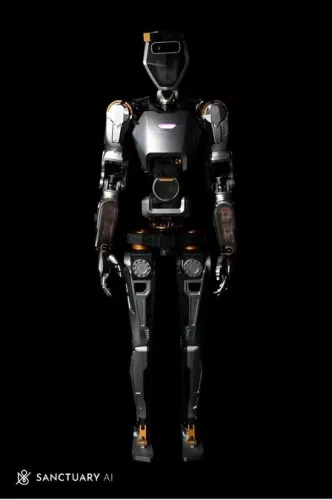
Sanctuary AI unveils Phoenix Gen 7
Sanctuary AI has officially unveiled the seventh generation of its Phoenix humanoid robot, marking a significant leap in autonomous mobility and manipulation capabilities. The announcement was made during a dedicated press conference at the company's headquarters in the United Kingdom, with global demonstrations scheduled for the coming quarter. This launch positions the Phoenix Gen 7 as a critical competitor in the rapidly evolving field of general-purpose humanoid robotics.
The Phoenix Gen 7 represents a major evolution from its predecessor, featuring enhanced actuation systems that allow for smoother movement and improved load-bearing capacity. The new model boasts a 15% increase in battery efficiency and reduced latency in its onboard neural processing unit, enabling faster decision-making in dynamic environments. Engineers at Sanctuary AI have focused heavily on the robot's dexterity, particularly in the hands and wrists. The Gen 7 model now includes tactile sensors capable of detecting surface textures and object weights with high precision. This advancement is critical for tasks requiring delicate handling, such as assembly line work in electronics manufacturing.
Key Technical Advancements
Additionally, the new iteration features an upgraded locomotion system. The Phoenix Gen 7 can navigate uneven terrain more effectively than previous models, thanks to adaptive suspension mechanisms in the legs. This makes the robot viable for outdoor construction sites or disaster relief scenarios where stability is paramount. Key specifications include:
- Enhanced torque density in the upper body actuators.
- Real-time obstacle avoidance using multi-modal sensors.
- Extended operational battery life of up to 8 hours per charge.
- Improved voice command recognition for human-robot interaction.
Market Implications and India Relevance
While Sanctuary AI is headquartered in the UK, the company has expressed strong interest in the Indian market. India’s booming manufacturing sector, particularly in automotive and electronics, is increasingly adopting automation to address labor shortages and rising wage costs. The Phoenix Gen 7 is priced competitively compared to legacy humanoid models, aiming to disrupt the industrial automation landscape.
Industry analysts suggest that the pricing structure will be attractive for Indian enterprises looking to scale automation without prohibitive capital expenditure. Although exact pricing for the Indian market has not been finalized, Sanctuary AI indicated that regional partnerships will help lower entry costs through local assembly options. This aligns well with the Indian government's "Make in India" initiative, which encourages foreign technology transfer and local manufacturing.
Sanctuary AI is currently in discussions with major Indian industrial conglomerates to pilot the Phoenix Gen 7 in manufacturing hubs across Gujarat and Tamil Nadu. These partnerships could see the robot deployed for logistics, heavy lifting, and precision inspection within the next 12 months.
CEO Statement and Future Roadmap
Ehsan Masoomi, CEO and Founder of Sanctuary AI, emphasized the company's commitment to making robotics accessible.
"The Phoenix Gen 7 is not just a technological milestone; it is a bridge to the future of work. We are designing these robots to be safe, reliable, and affordable for industries worldwide, including emerging markets like India," Masoomi stated during the launch event.
Looking ahead, Sanctuary AI plans to release software updates that enhance the AI's ability to learn from human demonstrations. The company also aims to integrate Phoenix Gen 7 with existing IoT ecosystems, allowing for seamless integration into smart factories.
Pre-orders for the Phoenix Gen 7 are now open globally. Limited units will be available for pilot programs in the UK and USA by the end of the year, with broader availability expected in Asia-Pacific regions by mid-next year. As humanoid robotics continues to mature, the unveiling of the Phoenix Gen 7 signals a shift toward practical, deployable solutions rather than prototypes. For India’s tech sector, this development offers a promising avenue for automation growth and industrial modernization.
More in Reviews & Opinion