AMRs in Warehouses: Shipping Hardware vs. Speculative Announcements
AMRs in Warehouses: Shipping Hardware vs. Speculative Announcements
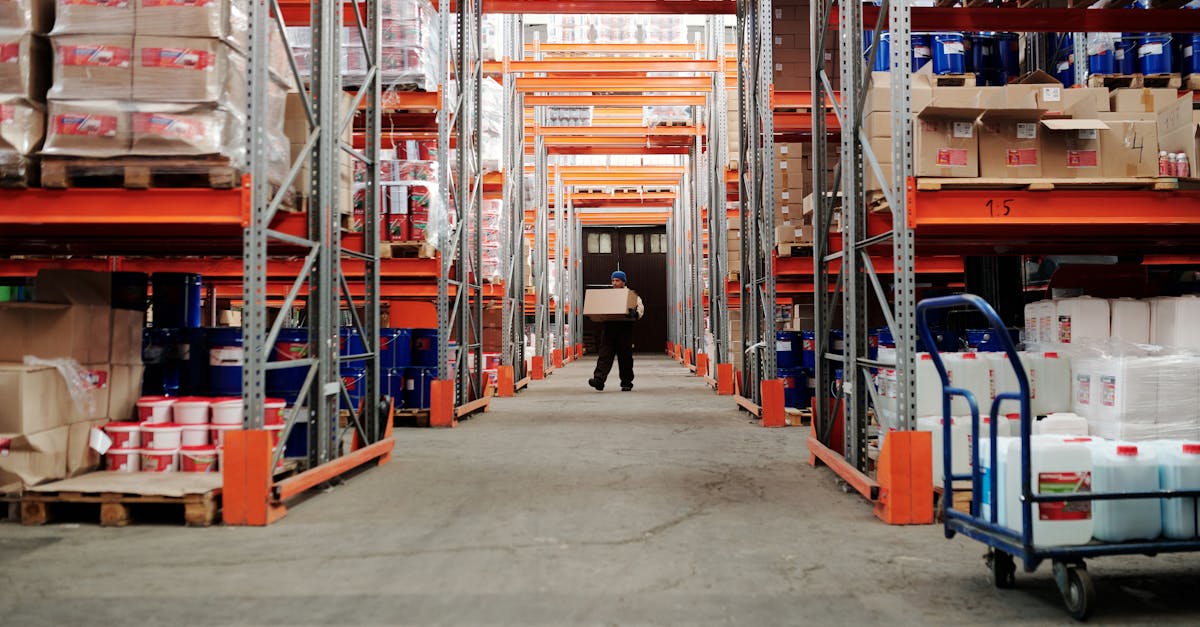
The warehouse automation sector has moved past the stage of theoretical viability. While media headlines often cite "revolutionary" breakthroughs or concept renders of fleets operating without human intervention, the editorial stance at RobotWale prioritizes shipping hardware over conceptual marketing. This article evaluates the current state of Autonomous Mobile Robots (AMRs) in warehouse logistics, distinguishing between deployed fleets and market announcements. The goal is to provide a grounded perspective on what is actually working today versus what is promised for the future.
Warehouse automation is not a monolithic solution. It is a spectrum ranging from simple conveyor systems to complex robotic fleets. Within this spectrum, the term "AMR" has become a catch-all descriptor. However, for procurement managers and logistics planners, precision matters. We grade claims by shipping hardware first, pilot deployments second, and announcements last. This hierarchy ensures that investment decisions are based on operational reality rather than press release optimism.
Defining the Line Between AGV and AMR
Automated Guided Vehicles (AGVs) have been the backbone of material handling for decades. They rely on fixed paths, using wires, magnets, or optical tape embedded in the floor to navigate. This makes them predictable but rigid. In contrast, Autonomous Mobile Robots (AMRs) utilize onboard sensors, typically LiDAR, stereo cameras, or visual SLAM (Simultaneous Localization and Mapping), to navigate dynamic environments.
This distinction is critical for the Indian market, where infrastructure varies significantly. A warehouse in Pune may have concrete floors that are smooth, while a facility in a tier-2 city might have uneven surfaces or dust. AGVs require significant infrastructure modification to install guidance paths. AMRs operate with minimal change management, adhering to the factory floor as it exists. However, the claim of "zero-touch" automation often overlooks the maintenance required for the robots themselves. A robot that breaks down frequently disrupts the workflow more than a human who requires a break.
Shipping hardware is the first tier of proof. It means the unit is manufactured, tested, and available for delivery. Pilot deployments are the second tier, proving the robot works in a specific environment for a specific duration. Announcements are the third tier, often indicating a partnership or a prototype. For warehouse managers, only the first two tiers guarantee operational capability. The industry is currently transitioning from the "post-AGV" generation, where robots are expected to be adaptive rather than just automated.
The Shipping Hardware Reality Check
Major players like Locus Robotics and GreyOrange have moved beyond pilot phases. Locus Robotics, for instance, has deployed its L4000 and L2000 models in e-commerce fulfillment centers globally. These units handle case picking and moveable shelves. In India, GreyOrange's Bot and Fetch systems are operational in major logistics parks in NCR and Pune. They have been running for years, providing data on uptime and throughput.
Shipping hardware does not guarantee success. It guarantees operational capability. AMRs must handle dynamic obstacles, including forklifts, pallet jacks, and humans. This requires sophisticated perception stacks. Safety certification is not optional. ISO 3691-4 defines safety requirements for industrial mobile robots. Compliance with this standard is a prerequisite for deployment in regulated environments. Without it, insurance claims may be voided in the event of an incident.
Integration is often the hidden cost. An AMR is useless if it cannot talk to the Warehouse Management System (WMS). The communication protocol, typically via APIs or MQTT, must be stable. Delays in communication can lead to bottlenecks where robots wait for instructions. In complex warehouses, the software layer often becomes the bottleneck, not the robot hardware itself. This requires skilled engineering teams to maintain the system during operations.
Key Players Deploying in India
GreyOrange remains a dominant player in the Indian market. Their "GreyBot" fleet handles pallet movement and case picking. They have integrated with major retailers for last-mile warehousing. The company has focused on high-load applications, moving goods rather than just moving people. This aligns with the physical needs of Indian supply chains, which often involve heavy pallets.
Locus Robotics has expanded its footprint through partners in India. Kiva-style systems have evolved into more sophisticated AMRs with better navigation. Other contenders include Geek+ (now part of HIKVISION) and Boston Dynamics' Stretch. While Boston Dynamics has impressive demos, their commercial availability in India is limited compared to GreyOrange. The Stretch specifically targets box moving, which is different from pallet moving.
Indian startups like Automate Robotics are also entering the space with localized AMRs designed for rougher terrain. These units often have higher ground clearance to handle dust and unevenness common in Indian industrial zones. Importantly, the focus is on localization. A robot designed for a US warehouse may not perform well in an Indian facility without adaptation. This includes software tuning for local lighting conditions and floor reflectivity.
Deployment timelines for AMRs typically range from 6 to 12 months. This includes site survey, infrastructure mapping, and safety calibration. The integration with Warehouse Management Systems (WMS) is the bottleneck, not the robot hardware itself. This timeline must be factored into business cases. The cost of downtime during installation can offset the savings from automation in the short term.
Technical Constraints and Safety Standards
Navigation accuracy is measured in millimeters. SLAM systems can drift over long periods. Re-localization is required to correct this drift. Battery life varies from 8 to 12 hours depending on payload and duty cycle. Charging infrastructure must be integrated into the warehouse layout. Wireless charging or manual swap stations are common. The choice depends on the operational shift schedule.
Safety sensors include LiDAR, cameras, and emergency stops. The robot must detect a human within 0.5 meters and decelerate. In India, where safety protocols are often inconsistent on the ground, the robot's safety layer becomes the primary regulatory compliance point. This means the robot must have a higher degree of safety than the human workforce to prevent liability issues.
Thermal management is another constraint. Batteries generate heat. In Indian climates, where ambient temperatures can be high, cooling systems are critical. Thermal throttling can reduce performance. Dust sensors are also necessary. A camera-based system can be blinded by dust. LiDAR is more robust but more expensive. The choice of sensor suite defines the robot's reliability in the long term.
Cost Analysis: INR Pricing and ROI
Pricing for AMRs varies by payload. A 500kg payload unit costs between ₹40 Lakhs to ₹60 Lakhs. High-load pallet movers can exceed ₹1 Crore. This does not include the WMS integration or infrastructure costs. The landed cost in India includes GST, customs duties, and logistics. Import duties on components can vary based on the country of origin.
ROI is calculated based on labor reduction. If a warehouse employs 50 pickers, and AMRs replace 30, the savings are significant. However, the cost of maintenance and spare parts must be factored in. Imported components carry GST and customs duties in India. Labor cost savings are the primary driver, but the capital expenditure (CAPEX) is high.
Operational expenditure (OPEX) includes battery charging, software licensing, and technician support. A typical service contract may cost 10% to 15% of the hardware cost annually. This must be included in the total cost of ownership (TCO) model. If the robot requires frequent calibration, the TCO rises. If the robot requires a dedicated operator, the labor savings decrease.
Conclusion
AMRs are not a silver bullet. They are tools for specific workflows. The focus must remain on shipping hardware and verified deployment data rather than concept videos. India's warehouse sector is maturing, moving from labor-intensive models to automation-assisted logistics. This transition requires patience and realistic expectations. Procurement teams must demand evidence of shipping hardware before committing capital.
The post-AGV generation is here, but it is not yet dominant. It is a growing segment within the broader logistics ecosystem. For those ready to deploy, the technology is viable. For those waiting for perfection, the market may continue to evolve. The key is to measure progress by shipments, not announcements.
References
1. GreyOrange Official Website - Product Specifications.
2. Locus Robotics Press Releases - Deployment Data.
3. ISO 3691-4 Standard - Safety Requirements.
4. Industry Reports on Warehouse Automation Costs.
5. RobotWale Internal Database on Indian AMR Pilots.
✓ Key takeaways
- •Hands-on view of AMRs in Warehouses: Shipping Hardware vs. Speculative Announcements inside our AMRs in Warehouses library.
- •Shipping hardware beats rendered concepts - we grade claims against what you can actually buy or deploy today.
- •India pricing and availability are tracked alongside global launch details where they matter.
References
Related articles
More in AMRs in Warehouses →