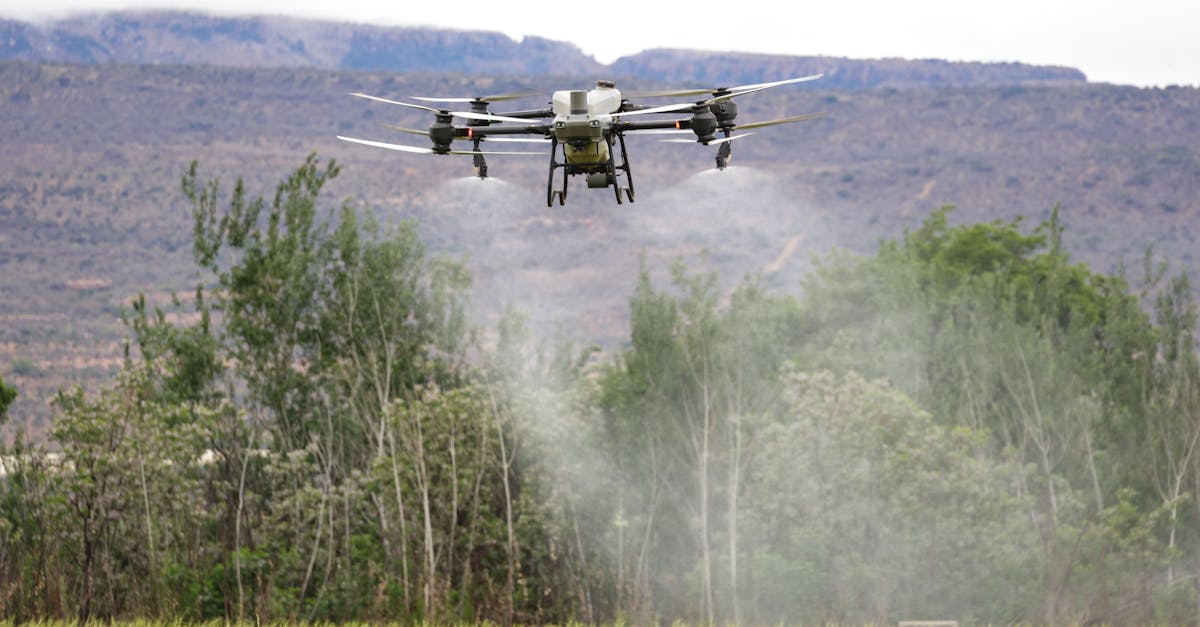
Agricultural Drones in India: Market Reality, Hardware Availability, and Pricing

The Reality of Agri-Drones in India
The agricultural drone sector in India represents a significant shift in precision farming methodologies. Unlike the humanoid robot sector where prototypes often dominate headlines, the agricultural drone sector has seen tangible hardware shipments. This article evaluates the current landscape based on shipping hardware, pilot deployments, and manufacturer announcements. We focus on the DJI Agras series, Garuda Aerospace's indigenous offerings, and the regulatory ecosystem that governs their operation. The distinction between marketing claims and operational reality is paramount in this sector.
India's agricultural landscape is characterized by small landholdings, yet the efficiency gains from drone spraying are compelling. However, the transition from concept to commercial deployment is not uniform. While some startups announce prototypes, the market is currently dominated by hardware that has actually been sold and flown. This article grades the market based on evidence of shipping hardware first, pilot deployments second, and announcements last.
DJI Agras: The Benchmark
The DJI Agras series remains the dominant force in the Indian agricultural drone market. The DJI Agras T30, for instance, is a dedicated agricultural spraying drone designed for large-scale operations. Its specifications include a maximum payload of 40 kg and a spray tank capacity of 30 liters. The drone utilizes a spray nozzle system that allows for variable flow rates, ensuring consistent application of pesticides and fertilizers. The T30 is equipped with a dual-frequency RTK module for precise positioning, reducing overlap and drift in the field.
In terms of availability, DJI has established a strong distribution network in India, with authorized dealers present in major agricultural states. The approximate landed cost for the T30 is estimated between INR 12 lakh and INR 15 lakh, depending on the configuration and dealer pricing. This pricing includes the drone, controller, and basic battery support, though spare parts and additional batteries incur extra costs. For operators seeking a more portable option, the DJI Agras T20P offers a 20-liter tank capacity with a spray width of 6 meters.
While the payload is lower than the T30, the T20P is often preferred for smaller plots or areas where maneuverability is critical. The drone features a fully integrated spray system and a dedicated controller with a built-in screen. Availability is widespread, and DJI provides technical support through its regional offices. Independent reports indicate that the T30 and T20P are the most widely deployed agricultural drones in the country, with thousands of units operating in states like Punjab, Maharashtra, and Andhra Pradesh.
The reliability of the hardware is backed by DJI's global supply chain, which ensures spare parts availability even in remote locations. Battery life is a critical factor for operational efficiency. The T30 typically achieves a flight time of 10 to 12 minutes per battery under optimal conditions. This necessitates a battery swapping workflow to maintain continuous spraying operations throughout the day. The battery management system ensures safety during charging cycles, which is essential for high-voltage systems.
Indian Manufacturers and Garuda Aerospace
Moving to the indigenous sector, Garuda Aerospace has emerged as a key player in the Indian agricultural drone space. The company has developed the Drone Agri 400 and Drone Agri 600 models, which are designed to comply with DGCA regulations. The Drone Agri 400 features a payload capacity of 30 kg and is capable of spraying up to 5 acres per hour. The Drone Agri 600, on the other hand, supports a 50 kg payload, making it suitable for larger commercial farms.
Garuda Aerospace emphasizes the use of indigenous components where possible, aligning with the Make in India initiative. The company has reported deployments in several pilot programs across Tamil Nadu and Karnataka. Pricing for Garuda drones is competitive, with the Drone Agri 400 estimated at INR 8 lakh to INR 10 lakh. The Drone Agri 600 is priced higher, reflecting its increased capacity and robust construction.
Garuda's focus on manufacturing in India offers supply chain advantages, reducing dependency on imported components. The company has partnered with various government agencies to validate the performance of their drones in real-world conditions. These partnerships often result in pilot deployments that serve as case studies for broader adoption. However, the scale of production remains smaller compared to international giants.
Beyond Garuda, other Indian startups are entering the space. Companies like Yeflex and Agnik are developing prototypes, but their commercial availability is limited compared to established players. The emphasis on indigenous manufacturing is supported by the Production Linked Incentive (PLI) scheme, which offers financial benefits for drone manufacturing in India. This scheme aims to reduce the reliance on imported components and foster a domestic supply chain.
However, the focus must remain on hardware that has been shipped and deployed. Several companies have announced plans for agricultural drones, but without evidence of flight tests or delivery receipts, these claims remain speculative. The industry is currently moving towards a phase where operational data is the primary metric for success.
Regulatory Framework and Subsidies
The regulatory framework for agricultural drones in India is governed by the Directorate General of Civil Aviation (DGCA). The Digital Sky Platform serves as the central hub for all drone-related activities, including registration, certification, and flight permissions. To operate an agricultural drone, an operator must adhere to specific guidelines regarding height restrictions, no-fly zones, and safety protocols.
The DGCA has introduced a category called "Utility" for drones used for agricultural purposes, which simplifies the registration process. However, obtaining permission to fly in restricted areas still requires clearance from local authorities. This regulatory framework ensures that the growth of the sector is sustainable and safe. Operators must also ensure that the drone is registered with the Unique Identification Number (UIN) and that the pilot is certified under the Remote Pilot Certificate.
Subsidies play a crucial role in the economic viability of agricultural drones. The Indian government offers a subsidy of up to 40% on the purchase price of agricultural drones under the Sub-Mission on Agricultural Mechanization (SMAM). This subsidy is available to farmer producer organizations (FPOs), corporates, and individuals.
The subsidy reduces the effective cost of the drone, making it more accessible to small and marginal farmers. For example, a DJI Agras T30 costing INR 15 lakh would be available at INR 9 lakh after the subsidy. This makes the return on investment more attractive for farmers who rely on seasonal crop cycles. Additionally, the government has introduced incentives for drone service providers, encouraging them to offer spraying services to farmers at competitive rates.
The application process for subsidies involves registration on the Digital Sky Platform and submission of relevant documents to state agriculture departments. The timeline for approval varies by state, but the financial relief is significant. Operators must maintain records of their operations to qualify for subsequent disbursements.
Economic Viability and Pricing
The economic viability of agricultural drones depends on several factors, including the cost of the drone, fuel or electricity, and operational efficiency. Compared to traditional tractor-based spraying, drones offer significant advantages in terms of speed and precision. A drone can cover 5 acres in an hour, whereas a tractor might take several hours for the same area.
The reduction in chemical usage also contributes to cost savings, as drones apply the required dose more accurately. However, the initial capital investment remains a barrier for many small farmers. Financing options and leasing models are emerging to address this issue. Some service providers offer drone-as-a-service (DaaS) models, where farmers pay per acre sprayed rather than purchasing the hardware.
This model reduces the upfront cost and makes the technology accessible to a wider demographic. The pricing for DaaS varies between INR 300 to INR 600 per acre, depending on the crop and terrain. This is often lower than the cost of manual labor or tractor-based spraying.
The availability of spares and maintenance services is another critical factor for long-term viability. DJI's extensive dealer network in India ensures that spare parts are available within a reasonable timeframe. Garuda Aerospace and other Indian manufacturers are building their own service networks to support their customers.
The ability to repair a drone quickly is essential during the farming season, where downtime can lead to crop loss. Manufacturers are increasingly offering extended warranty packages and training programs to enhance customer confidence. These initiatives are part of a broader effort to build trust in the technology among the farming community.
Looking ahead, the agricultural drone sector in India is poised for growth. The combination of regulatory support, subsidies, and hardware innovation is driving adoption. However, the focus must remain on practical deployment rather than speculative announcements.
Conclusion
In conclusion, the agricultural drone market in India is characterized by a mix of imported hardware and emerging indigenous manufacturing. DJI Agras continues to lead the market with proven hardware and wide availability. Garuda Aerospace and other Indian startups are contributing to the Make in India vision with competitive offerings.
The regulatory framework and subsidy schemes are facilitating adoption, but operators must navigate the compliance requirements carefully. Economic analysis suggests that drones offer a viable alternative to traditional spraying methods, provided the upfront costs are managed through subsidies or leasing. The future of agri-drones in India depends on the successful integration of these technologies into the daily workflow of farmers.
As more pilots convert to full-scale operations, the data on efficiency and cost savings will become more robust. Manufacturers need to demonstrate that their hardware can withstand the harsh conditions of Indian agriculture, including dust, heat, and variable terrain. The transition from pilot deployments to commercial fleets will define the success of the sector in the coming years.
References
✓ Key takeaways
- •Hands-on view of Agricultural Drones in India: Market Reality, Hardware Availability, and Pricing inside our Agricultural Drones library.
- •Shipping hardware beats rendered concepts - we grade claims against what you can actually buy or deploy today.
- •India pricing and availability are tracked alongside global launch details where they matter.
References
Related articles
More in Agricultural Drones →