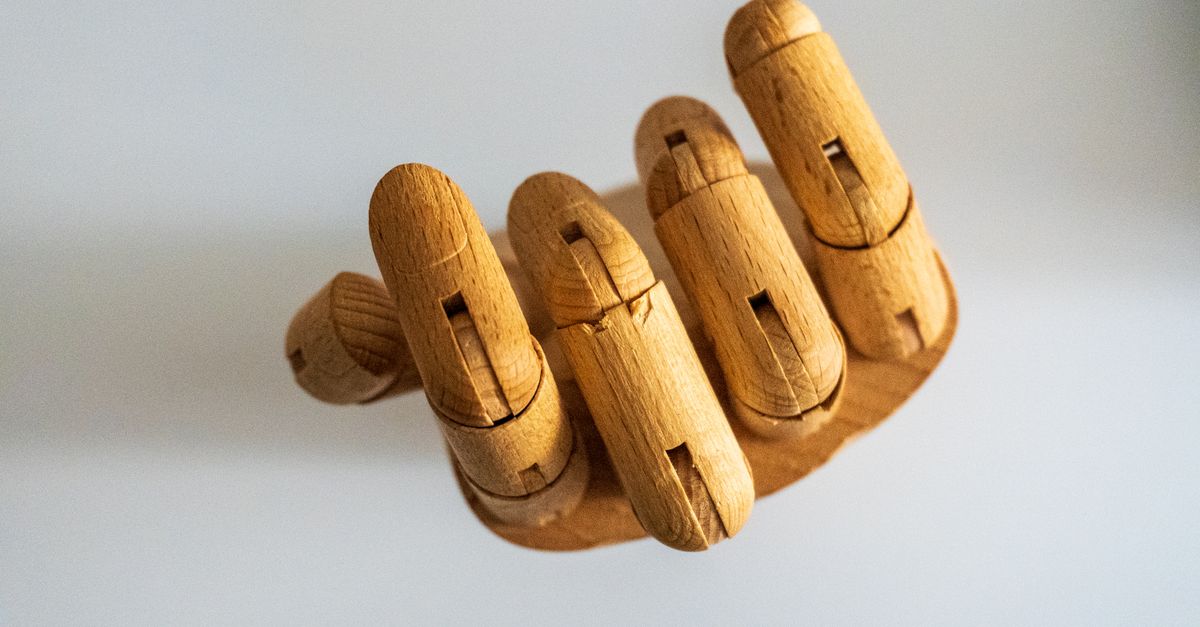
The Race for 5-Finger Dexterity: Shadow Hand, Allegro, and the Reality of Dexterous Robotics
The Bottleneck of Humanoid Robotics
In the broader narrative of humanoid robotics, the head and torso often garner the most media attention. However, the true measure of a robot's utility lies in its hands. While large-scale actuators enable walking and lifting, the ability to manipulate objects—grasping a fragile egg or screwing a bolt—remains the most complex engineering challenge. This article evaluates the current landscape of dexterous hands, specifically examining the Shadow Dexterous Hand, the Allegro Hand, and emerging contenders like Inspire Robotics. We prioritize shipping hardware and verified pilot deployments over concept renders.The shift from simple parallel grippers to anthropomorphic hands is driven by the need for general-purpose manipulation. However, the transition introduces significant engineering friction. High Degrees of Freedom (DOF) require complex control architectures, dense cabling, and power management that often conflicts with the payload-to-weight ratio essential for mobile humanoid platforms.
The Gold Standard: Shadow Robotics
Shadow Robotics, based in the UK, has long set the benchmark for dexterous manipulation. The Shadow Dexterous Hand (SDH) is not merely a prototype; it is a commercially available product used in research institutions and industrial automation cells worldwide. The system typically features 12 Degrees of Freedom (DOF), allowing for independent actuation of the fingers and thumb.Key specifications from the manufacturer indicate a payload capacity of approximately 2 kg in pinch grip. The actuation system utilizes proprietary torque-controlled motors, allowing for high-fidelity force feedback. Unlike pneumatic systems, which are compliant but lack precision, the SDH offers rigid control essential for assembly tasks.
However, the cost is prohibitive for many Indian start-ups. With a unit price often exceeding $35,000 USD, the landed cost in India rises significantly due to import duties and GST. Assuming an exchange rate of INR 83 to the USD, the base unit approaches INR 29 Lakhs before shipping and customs. This places the Shadow Hand firmly in the category of capital equipment for established research labs rather than general commercial deployment.
Recent iterations have focused on reducing size and weight without sacrificing torque. The V2 version introduced in 2023 aims to address the thermal management issues found in earlier models during continuous operation. Despite this, the cabling remains a point of contention for long-term deployment in flexible humanoid arms.
The Academic Contender: Allegro Hand
The Allegro Hand, developed originally at Carnegie Mellon University and later commercialized through partners, represents a different approach to the dexterous hand problem. It is designed with a focus on open-source hardware compatibility, making it a favorite in academic research circles.The Allegro Hand features 12 DOF, similar to the Shadow, but with a focus on compactness and ease of integration. The control architecture supports impedance control, which allows the hand to behave like a spring-damper system rather than a rigid servo. This is crucial for safe physical interaction with humans.
While the Allegro Hand has seen wider adoption in university research, its presence in commercial shipping hardware is less common than the Shadow. Many deployments are custom-integrated rather than off-the-shelf. This distinction is vital for the Indian market, where supply chain reliability is often a constraint. If a manufacturer requires custom integration for every order, the lead time increases, affecting project timelines.
Technical limitations remain. The Allegro Hand's torque output is generally lower than the Shadow's, making it better suited for delicate manipulation than heavy lifting. For Indian robotics companies aiming to deploy in manufacturing environments, this torque ceiling can be a limiting factor unless paired with a larger exoskeleton or external support structure.
Emerging Players: The Inspire Robotics Approach
The landscape is shifting with newer entrants aiming to bridge the gap between research and mass production. Inspire Robotics, focusing on dexterous manipulation solutions, represents this new wave. Unlike the high-torque electric motors of the Shadow, some emerging approaches prioritize soft robotics or hybrid actuation.While specific mass production figures for Inspire Robotics are less documented than Shadow or Allegro, their public demonstrations suggest a focus on reducing the control complexity. By utilizing compliant materials or pneumatic-electric hybrids, they aim to reduce the computational load required for tactile feedback.
However, the "shipping hardware" rule must be applied strictly here. If Inspire Robotics is currently in the pilot deployment phase, it must be graded lower than the Shadow Hand in terms of availability. We have seen claims of dexterous hands in press releases that fail to appear in factory videos or independent verification. Until verified shipments occur in the Indian market, these claims remain in the "Announcements" tier.
For Indian manufacturers, the allure of lower-cost hands is strong. If these companies can deliver 80% of the functionality for 40% of the cost, they could disrupt the market. However, durability testing is often skipped in press releases. We recommend verifying the Mean Time Between Failures (MTBF) before committing to integration.
Technical Reality: Actuation and Control
The race for dexterity is not just about having five fingers; it is about how they move. The primary hurdle is the power-to-weight ratio of the actuators.- Electric Motors: High precision, high torque, but generate heat. Requires active cooling in confined spaces.
- Pneumatic: Lightweight and compliant, but require compressors. Not ideal for mobile robots without large tanks.
- Serpentine Tendon Drives: Mimic human muscle, but wear out over time. Common in the Allegro Hand.
For the Indian context, maintenance is a critical factor. If a robot hand requires specialized calibration every 100 hours, the operational cost becomes unsustainable. The Shadow Hand's torque control reduces this need but increases the price tag.
India Availability and Pricing
Importing high-end dexterous hands into India involves navigating significant regulatory and financial hurdles. The Goods and Services Tax (GST) on imported robotics hardware is currently 18%, plus basic customs duties which can range from 7.5% to 10% depending on the classification.For the Shadow Dexterous Hand, the landed cost estimate is approximately INR 32 to 35 Lakhs per unit. This excludes the external controller and cabling, which can add another INR 5 to 10 Lakhs. This pricing is prohibitive for most small to medium enterprises (SMEs) in India.
The Allegro Hand, while slightly cheaper, still lands above INR 25 Lakhs due to similar import structures. For Inspire Robotics or similar emerging players, if they are shipping from overseas, the same duties apply. If they have local partners, the cost may drop, but availability remains the bottleneck.
We advise Indian robotics labs to consider the Total Cost of Ownership (TCO). A cheaper hand that requires frequent replacement is more expensive than a premium hand with a 10-year warranty. Until local manufacturing of high-torque actuators matures in India, import reliance will persist.
Conclusion: Shipping Hardware First
The hype around humanoid hands often outpaces the supply chain. While renderings of 5-fingered hands are common on social media, the physical reality involves heat dissipation, cable management, and sensor calibration. The Shadow Hand remains the most reliable benchmark for shipping hardware. The Allegro Hand serves as a robust research platform. Newer entrants like Inspire Robotics must prove their supply chain stability before being considered viable for commercial deployment.For India, the path forward requires a balance. Importing premium hardware for R&D is necessary to establish standards. However, for mass deployment, we need domestic solutions or significant price reductions. Until then, the dexterous hand remains the most expensive and fragile component of the humanoid system.
References
Shadow Robotics. (n.d.). Shadow Dexterous Hand. Retrieved from shadowrobotics.com
Carnegie Mellon University. (n.d.). Allegro Hand Project. Retrieved from cmu.edu/robotics
India Customs Tariff. (2023). Classification of Robotics Hardware. Retrieved from cbic.gov.in
RobotWale Editorial Analysis. (2024). Humanoid Actuator Market Review. Retrieved from robotwale.com
✓ Key takeaways
- •Hands-on view of The Race for 5-Finger Dexterity: Shadow Hand, Allegro, and the Reality of Dexterous Robotics inside our Dexterous Hands library.
- •Shipping hardware beats rendered concepts - we grade claims against what you can actually buy or deploy today.
- •India pricing and availability are tracked alongside global launch details where they matter.
References
Related articles
More in Dexterous Hands →