Unitree Robotics: Assessing the Shipping Reality of China's Quadruped and Humanoid Pioneer

Overview of Unitree Robotics: Hardware Over Hype
Hangzhou Unitree Robotics Co., Ltd. has established itself as a distinct outlier in the global robotics sector by prioritizing mass-market hardware shipment over concept-level announcements. Founded in 2015 and headquartered in Hangzhou, Zhejiang, the company initially gained traction through commercial drone technology before pivoting aggressively into legged robotics. Unlike many competitors that launch prototypes at major expos without a clear path to volume manufacturing, Unitree has consistently delivered functional quadruped and bipedal units to paying customers.
RobotWale's assessment relies on verifiable data points: spec sheets, delivery timelines, and third-party independent reporting. While the company frequently showcases advanced capabilities at exhibitions such as the World Robot Conference or CES, the editorial focus remains on what is currently available for procurement and deployment in enterprise environments.
Quadruped Portfolio Analysis
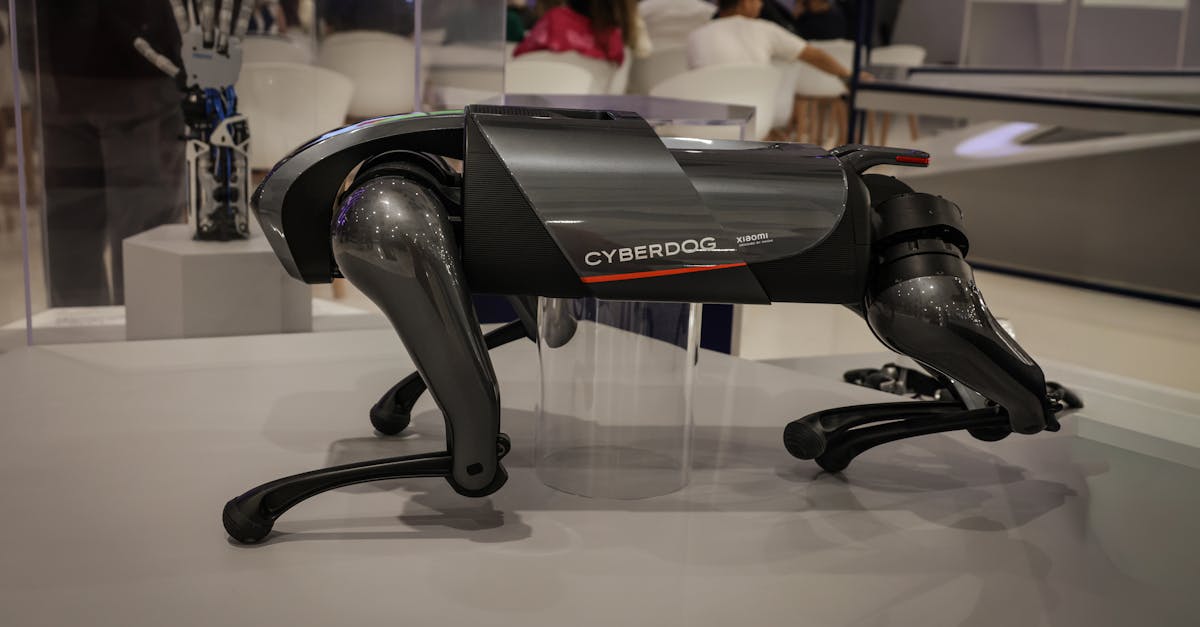
The company's quadruped lineup is segmented into consumer and industrial categories. This segmentation is crucial for understanding the technological maturity and the specific value proposition for potential buyers.
Go Series: Consumer Accessibility
The Go1 and Go2 models represent the company's entry into the consumer and developer market. These units are designed to be lightweight, affordable, and capable of running custom algorithms via SDKs. The Go2, released in late 2023, introduced edge computing capabilities with an integrated NVIDIA Orin NX processor.
Key Specifications (Go2 B1/B2 variants):
- Weight: Approximately 12kg to 14kg depending on battery configuration.
- Speed: Capable of running at speeds up to 18 km/h in open environments.
- Battery Life: Operational duration typically ranges from 1.5 to 2 hours under active motion.
- Perception: Equipped with LiDAR and stereo cameras for SLAM (Simultaneous Localization and Mapping).
While marketing materials often depict agile parkour-style movement, independent field testing suggests these units perform best in structured environments. The software ecosystem is open, allowing for Python-based control, but out-of-the-box autonomy for complex navigation tasks remains limited compared to fully deployed enterprise solutions.
B Series: Industrial Durability
The B1 and B2 series target industrial applications, including inspection, search and rescue, and logistics. These units feature higher torque actuators and more robust chassis designs.
The B2, in particular, marks a significant shift toward heavy-duty performance. It is designed to carry payloads of up to 100kg and operate in harsher environments. The actuator design utilizes proprietary high-torque motors that balance efficiency with power density. For Indian enterprises, the B2 series offers a lower-cost alternative to Western quadrupeds like Boston Dynamics' Spot, though availability and after-sales support are critical differentiators.
Humanoid Robotics Strategy
Unitree's entry into the humanoid space has been marked by rapid iteration. The company moved quickly from concept to demonstration, culminating in the H1 model and the subsequent G1 model.
H1 Performance Metrics
The H1 humanoid robot, first demonstrated in 2023, is a full-size bipedal unit standing approximately 1.75 meters tall. It weighs roughly 80kg and features a total of 34 degrees of freedom (DoF). The actuation system is a primary selling point, utilizing high-torque joint motors capable of generating significant torque at the hips and knees.
Technical Constraints:
- Autonomy Level: Limited to basic gait patterns and obstacle avoidance. Advanced manipulation tasks are not fully autonomous out-of-the-box.
- Power: Operational time is generally cited around 2 hours.
- Control: Requires external computing units for advanced decision-making.
While the H1 demonstrated the ability to stand up after being pushed and perform running gaits, these feats rely heavily on pre-programmed balance algorithms. The claim of "general-purpose" utility remains aspirational until verified through long-term pilot deployments.
G1 Market Positioning
In late 2024, Unitree announced the G1, a smaller, more affordable humanoid designed for the general market. Priced at approximately $9,999 USD, it represents a significant reduction in cost compared to industry benchmarks. The G1 stands at 1.25 meters and weighs roughly 50kg.
The price point is aggressive, potentially disrupting the market for educational and light industrial robotics. However, cost reduction often implies trade-offs in actuator durability and software depth. Early reports suggest the G1 is aimed at developers and researchers rather than heavy industrial deployment. The availability of shipping units is the primary metric for success here; until bulk orders are fulfilled at this price point, the claim remains a strong promise rather than a proven market reality.
India Market Viability & Cost Structure
For the Indian market, Unitree's pricing requires careful calculation of landed costs. The base hardware prices listed on the Unitree Global website are in USD, but the Indian import ecosystem imposes significant additional costs.
Estimated Landed Cost
Assuming a base price of $9,999 for the G1 and $1,999 for the Go2:
- Import Duty: India imposes basic customs duty (BCD) on robotics components and finished goods. Depending on the HS code classification, duties can range from 10% to 25%.
- IGST: Integrated Goods and Services Tax (typically 18% to 28%) applies to the value including duty.
- Logistics & Handling: Freight costs for heavy machinery and battery safety certifications add 5-10%.
Approximate INR Pricing:
- Unitree Go2: Base cost ~₹1.6L. Landed cost estimate: ₹2.2L to ₹2.5L.
- Unitree G1: Base cost ~₹8.3L. Landed cost estimate: ₹11L to ₹13L.
- Unitree B2: Base cost ~₹20L+. Landed cost estimate: ₹30L+.
These figures are estimates based on current exchange rates and standard industrial import tariffs. They exclude specific state-level taxes or exemptions for R&D entities. Availability is currently channel-based; direct imports require compliance with Bureau of Indian Standards (BIS) regulations for electronic goods.
Critical Assessment of Technology & Support
Unitree's value proposition is undeniable in terms of hardware cost-performance ratios. The company has successfully integrated proprietary actuators that offer high torque density at a fraction of the cost of Western competitors. However, the ecosystem surrounding the hardware is the secondary concern.
Software Maturity: The SDK is functional but often requires significant engineering effort to integrate into complex workflows. Unlike mature platforms that offer plug-and-play enterprise APIs, Unitree's software layer often demands in-house robotics expertise.
Support Infrastructure: In India, Unitree does not currently have a fully established physical support center. Procurement often relies on authorized distributors or direct import. This creates risks regarding warranty claims, spare part availability, and technical troubleshooting.
For Indian manufacturers and startups, the hardware offers a viable entry point into robotics. However, the lack of a localized service network means the total cost of ownership (TCO) must account for potential downtime and specialized engineering resources.
Conclusion
Unitree Robotics stands as a formidable force in the legged robotics sector, primarily due to its ability to ship hardware at competitive price points. The Go series and B series quadrupeds are proven shipping products with verified use cases. The humanoids, specifically the G1, represent the next frontier of cost-disruption.
For the Indian market, Unitree presents a high-potential opportunity for cost-sensitive R&D and industrial pilots. However, stakeholders must prioritize pilot deployments over concept demonstrations. The transition from shipping units to reliable enterprise solutions requires sustained investment in software and local support infrastructure.
References
✓ Key takeaways
- •Hands-on view of Unitree Robotics: Assessing the Shipping Reality of China's Quadruped and Humanoid Pioneer inside our Unitree Robotics library.
- •Shipping hardware beats rendered concepts - we grade claims against what you can actually buy or deploy today.
- •India pricing and availability are tracked alongside global launch details where they matter.
References
Related articles
More in Unitree Robotics →