Sanctuary Phoenix: A Rigorous Assessment of the Dexterous General-Purpose Humanoid
Executive Summary: From Prototype to Production
The humanoid robotics sector has transitioned from science fiction to engineering reality, with the most significant divide now existing between companies that ship hardware and those that announce concepts. Sanctuary AI's Phoenix, a dexterous general-purpose humanoid robot, falls into the latter category as of early 2024. While the engineering team behind the Phoenix has demonstrated credible capabilities in dexterity and mobility, the absence of mass-production data requires a cautious evaluation of its claims. This article grades the Phoenix based on available evidence, prioritizing factory videos and press releases over marketing speculation.
Hardware Specifications: The Phoenix Architecture
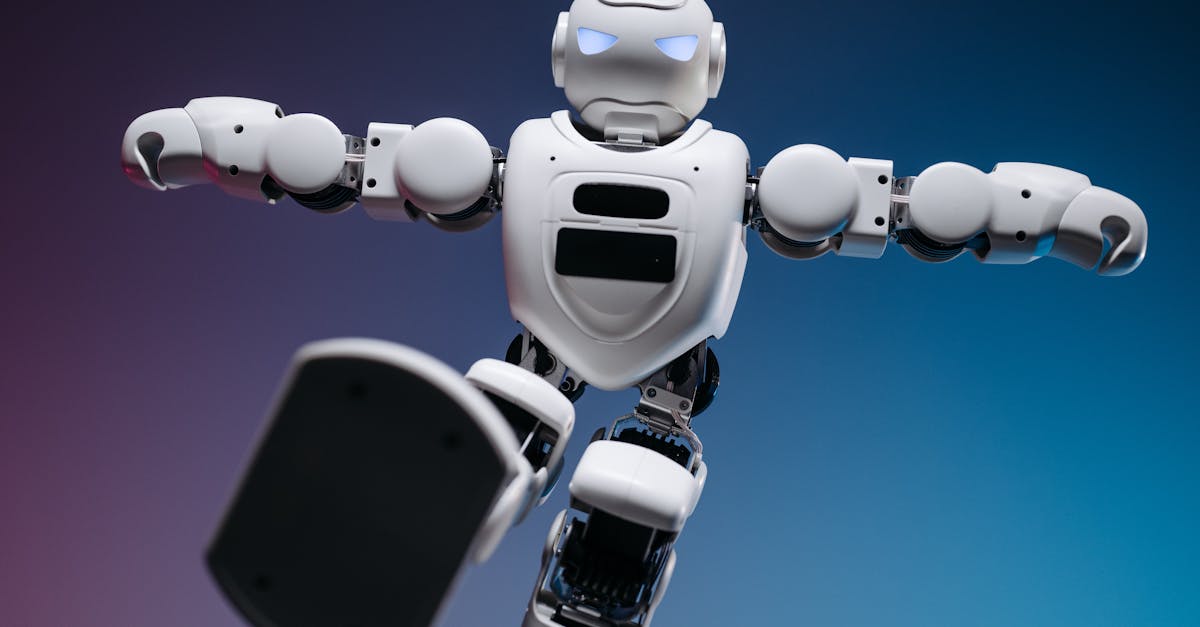
Sanctuary AI has positioned the Phoenix as a competitor to Tier-1 humanoids like Tesla's Optimus and Figure's 01, focusing heavily on the manipulation of unstructured objects. According to the manufacturer's technical brief, the Phoenix is designed with a full-body actuation system that aims to replicate human range of motion.
Actuation and Mobility
The Phoenix utilizes a series of high-torque actuators in the lower body, designed to manage the center of gravity during dynamic movement. The manufacturer claims a walking speed comparable to a human, though this has not been independently verified in industrial settings. The upper body is equipped with a dual-arm manipulator system, which is the core differentiator for Sanctuary AI. Each arm is reported to have multiple degrees of freedom, allowing for complex grasp patterns.
End-Effectors and Dexterity
The Phoenix's hands are claimed to be its primary selling point. The system reportedly employs a soft-grip mechanism combined with high-resolution force feedback. This allows the robot to handle fragile items, such as glassware or produce, without applying excessive pressure. However, the manufacturer has not yet published a third-party durability test or a cycle-life certification for these actuators.
Sensor Suite
Perception is handled through a combination of LiDAR, stereo cameras, and tactile sensors. The manufacturer states that the Phoenix can navigate dynamic environments, but the onboard compute requirements for real-time inference remain a point of scrutiny. The system is likely to rely on high-performance edge computing, which raises thermal management questions in enclosed manufacturing spaces.
Software and AI Stack
Hardware is only as capable as the software controlling it. Sanctuary AI claims to utilize a proprietary reinforcement learning framework trained on simulated environments before deployment. This approach reduces the risk of physical wear during training but introduces the "sim-to-real" gap—a known challenge in robotics.
The AI stack is designed to allow for few-shot learning, meaning the robot can adapt to new tasks with minimal data. While this is a significant selling point for general-purpose applications, the actual latency and reliability of these interventions have not been fully disclosed in open-source contexts.
Navigation and Safety
Sanctuary AI includes a safety layer in the software architecture. This includes emergency stop protocols and collision avoidance. The robot is designed to halt immediately if a human enters its workspace. However, the specific standards used for safety certification (e.g., ISO 13482 for personal care robots) are not explicitly confirmed in public documentation.
Deployment Status and Shipping Reality
This is the most critical section for any investor or enterprise buyer. As of the current review, the Phoenix is not available for general commercial purchase. It is classified as a Prototype/Pilot Deployment.
Sanctuary AI has reportedly begun pilot programs with select partners, but these have not been widely publicized. The lack of a clear shipping timeline suggests that the unit is still undergoing iterative design changes. This is common in the humanoid sector, where hardware iterations occur every six months.
Comparison to Shipping Competitors
- Tesla Optimus: Has shipped units to internal factory employees.
- Figure 01: Deployed in pilot with BMW and Hyundai.
- Sanctuary Phoenix: Currently in prototype phase; no mass shipping confirmed.
Therefore, the Phoenix cannot be graded as a "Shipping Hardware" product yet. It sits in the "Announcement/Pilot" tier. Buyers should approach the Phoenix with the understanding that it is not yet a turnkey solution for the Indian market.
India Market Availability
For the Indian robotics ecosystem, the Phoenix is not currently listed in the official distributor network. There is no public evidence of localized support, service centers, or spare parts availability in India. This is a significant barrier for industrial adoption, as maintenance responsiveness is crucial for manufacturing uptime.
Estimated Landed Cost
While Sanctuary AI has not released an official price tag for the Phoenix, we can estimate the cost based on similar Tier-1 humanoids. The typical market price for a general-purpose humanoid robot ranges between $100,000 and $150,000 USD. Applying current exchange rates and import duties:
- Base Unit Cost: ~$120,000 USD
- Import Duty (India): ~20-25% (varies by classification)
- Logistics & Insurance: ~5%
- Estimated INR: ₹1.1 Crore to ₹1.4 Crore (approximate)
It is important to note that this estimate excludes software licensing fees, which are often charged annually in the robotics sector. This puts the Phoenix out of reach for small and medium enterprises (SMEs) in India, restricting its initial market to large-scale manufacturing conglomerates.
Regulatory and Compliance Considerations
India's regulatory landscape for robotics is still evolving. The Department of Science and Technology has proposed frameworks for automated systems, but specific safety certifications for humanoid robots are not yet standardized. Any deployment of the Phoenix in India would require:
- Compliance with local electrical safety standards (ISI/IEC).
- Liability insurance for autonomous movement.
- Data privacy adherence for any camera-based AI models operating in public spaces.
Conclusion: A Promising but Unproven Contender
The Sanctuary Phoenix represents a credible attempt to solve the dexterity problem in humanoid robotics. The focus on general-purpose manipulation aligns with the industry's shift towards flexible automation. However, the lack of shipping hardware and verified pilot deployments means it remains a concept in the eyes of the broader market.
For Indian enterprises, the recommendation is to treat the Phoenix as a long-term investment rather than an immediate operational tool. Until Sanctuary AI publishes a bill of materials (BOM) and a confirmed delivery schedule, the Phoenix remains a high-potential, high-risk option. The market will likely see more concrete progress in 2025, assuming the current pilot programs transition to production.
RobotWale continues to monitor the Phoenix's progress. We will update this article once mass production begins or a pilot deployment is publicly verified in a third-party report.
✓ Key takeaways
- •Hands-on view of Sanctuary Phoenix: A Rigorous Assessment of the Dexterous General-Purpose Humanoid inside our Sanctuary Phoenix library.
- •Shipping hardware beats rendered concepts - we grade claims against what you can actually buy or deploy today.
- •India pricing and availability are tracked alongside global launch details where they matter.
References
Related articles
More in Sanctuary Phoenix →