Case & Piece Picking: Shipping Hardware vs. AI Hype in Warehouse Automation

Introduction: The Reality of Automated Picking
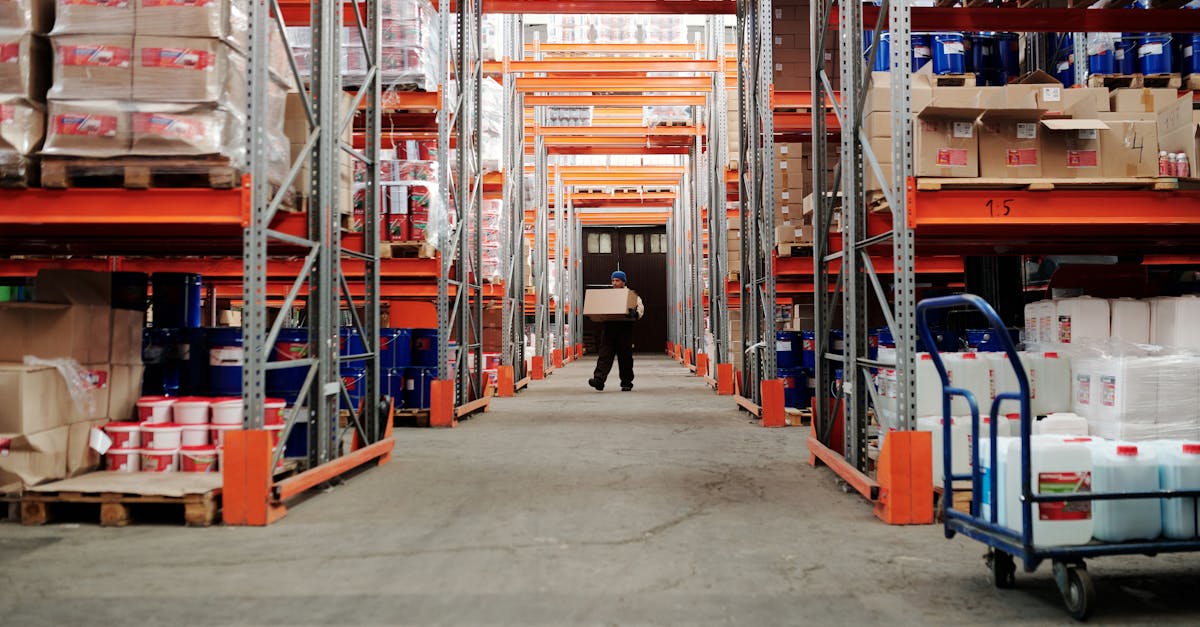
In the hierarchy of robotic applications, warehouse and logistics automation stands as one of the most mature yet rapidly evolving sectors. The category of "Case & Piece Picking" represents the operational bottleneck in supply chains: the physical act of moving goods from storage to shipping lanes. While marketing materials often promise a fully autonomous future, the editorial standard at RobotWale.com demands a distinction between shipping hardware, pilot deployments, and conceptual announcements. This article evaluates the current state of case and piece picking, specifically examining Symbotic, Covariant, and traditional pick-and-place robotics, with a focus on real-world deployment and Indian market viability.
The Symbotic Approach: Hardware-First Warehouse Systems
Symbotic has carved a distinct niche by moving beyond the concept of a standalone robotic arm. Their system is an integrated warehouse solution where Autonomous Mobile Robots (AMRs) move inventory to fixed robotic workstations. This approach addresses the high-volume, high-speed requirements of large retailers rather than the flexibility required for varied e-commerce orders.
Deployment Status: As of early 2024, Symbotic has shipped hardware to major clients. The most significant deployment is with Walmart, where the system operates in specific distribution centers. This is not a pilot; it is a live, operational environment where AMRs navigate alongside fixed robotic pickers. The hardware includes the AMRs, the shelving system, and the robotic arms mounted at the picking stations.
Technical Specifications: The system claims throughput rates of up to 20,000 picks per hour. This is achieved through a combination of computer vision and high-speed pickers. The hardware is designed for structured environments where the bin placement is known or mapped. For case picking, the system handles pallets and totes with heavy payloads. For piece picking, the focus is on high-speed SKU retrieval.
India Availability: While Symbotic hardware is shipping globally, direct deployment in India is limited by infrastructure and capital expenditure (CAPEX). A full Symbotic distribution center solution typically costs in the range of $10 million to $20 million USD. In INR, this translates to approximately ₹80 crore to ₹160 crore, excluding installation and integration. For Indian logistics firms, this is a barrier unless they are top-tier players like Flipkart or Amazon India operating at scale.
Covariant: AI Software on General-Purpose Hardware
Covariant represents a different philosophy. Rather than building a proprietary warehouse system, they focus on the AI layer that enables robots to pick unstructured items. Their claim is generalization: a robot trained on thousands of objects can pick new items without new programming.
Deployment Status: Covariant ships software primarily, deployed on existing robotic arms from partners like Intuitive or other OEMs. The "shipping hardware" aspect here is nuanced. Covariant partners with manufacturers to integrate their AI stack. We have seen pilots with major retailers, but widespread commercial deployment across diverse warehouse types is still in the pilot deployment phase rather than a mass shipping phase.
Technical Specifications: The core capability is the perception and planning stack. The hardware requirements are standard industrial arms (e.g., 6-axis arms). The system relies on depth cameras and force control. The claim is that it reduces the need for complex fixturing. However, the hardware must still be robust enough to handle the physical stress of picking.
India Availability: Covariant's software can be licensed for deployment in India. However, the hardware (the arms) must be sourced from manufacturers like ABB, Fanuc, or Yaskawa. The cost implication is a hybrid model: CAPEX for the arm plus a recurring license fee for the AI. Estimated hardware cost for a collaborative arm setup is ₹15 lakh to ₹40 lakh INR per unit, plus integration costs.
Traditional Pick-and-Place: The Workhorse of Logistics
Beyond the AI hype, traditional pick-and-place robots remain the backbone of warehouse automation. Manufacturers like Fanuc, ABB, and KUKA offer systems that are proven, reliable, and often cost-effective for structured tasks.
Case Picking: This involves moving pallets or cases. Robots here are often gantry systems or heavy-duty SCARA arms. They are programmed for repetitive tasks. The ROI is clear because the task is structured. A Fanuc M-2000, for example, can handle 2000kg payloads.
Piece Picking: This is the harder challenge. Traditional robots require significant programming for each new SKU. If a box changes shape or color, the robot may fail. This is where AI solutions like Covariant aim to intervene. However, for a warehouse with 100 SKUs, traditional robots are often more reliable and cheaper to maintain.
India Availability: Traditional robots are widely available in India through distributors. A standard 6-axis arm can be purchased for ₹15 lakh to ₹50 lakh INR. A collaborative arm (cobot) ranges from ₹5 lakh to ₹20 lakh INR. These are landed costs including import duty, which is typically 10-15% for robotics in India.
Market Viability and Cost Analysis for India
The decision to deploy case and piece picking technology in India depends heavily on labor costs and infrastructure maturity. In regions with low labor costs, the ROI for high-end automation is longer than in the US or Europe.
Estimated Landed Costs:
- Symbotic System: ₹80 crore to ₹160 crore (Full Center).
- Covariant + Arm: ₹2 crore to ₹10 crore (Multi-arm cell).
- Traditional Pick-and-Place: ₹15 lakh to ₹50 lakh per arm.
Operational Reality: A Symbotic system requires a dedicated warehouse structure. A Covariant system requires high-speed network infrastructure. Traditional systems require minimal infrastructure. For Indian SMEs, the traditional route is the only viable option. For large enterprises (Reliance, Adani), the AI route is becoming a competitive necessity.
Conclusion: Hardware First
The case and piece picking market is moving from hype to hardware. Symbotic has shipped systems to Walmart. Covariant has pilots in place. Traditional manufacturers have shipped millions of units. The editorial verdict is clear: prioritize shipping hardware and pilot deployments over press releases. For Indian logistics managers, the path forward is not just about buying the "smartest" robot, but the one that ships today and integrates with existing infrastructure.
References
- Symbotic Press Release: Walmart Partnership.
- Covariant Official Website: Platform & Partners.
- Fanuc India: Standard Robotics Solutions.
- RobotWale Editorial: Hardware Grading Standards.
✓ Key takeaways
- •Hands-on view of Case & Piece Picking: Shipping Hardware vs. AI Hype in Warehouse Automation inside our Case & Piece Picking library.
- •Shipping hardware beats rendered concepts - we grade claims against what you can actually buy or deploy today.
- •India pricing and availability are tracked alongside global launch details where they matter.
References
Related articles
More in Case & Piece Picking →