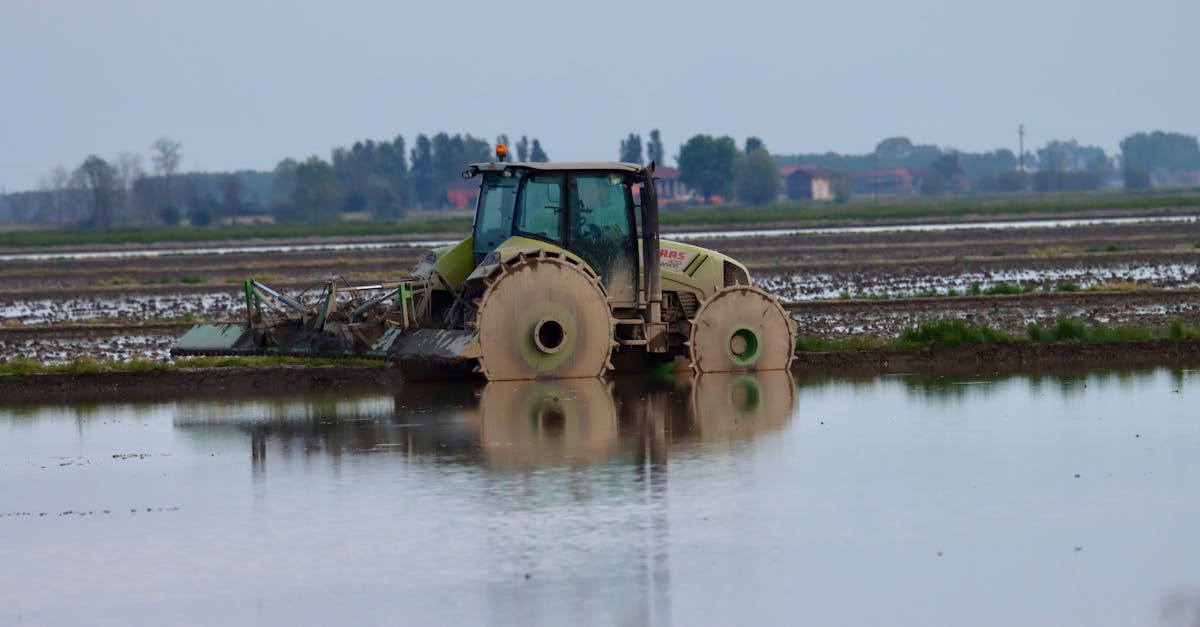
Autonomous Tractors in India: Shipping Hardware, Pilot Deployments, and the Ground Reality

Introduction: Separating Hardware from Hype
The agricultural sector is undergoing a technological shift, yet the narrative around autonomous tractors remains heavily skewed by marketing materials. This article distinguishes between production-ready hardware and conceptual announcements. We focus on John Deere and Mahindra. The distinction between "auto-guidance" and "full autonomy" is critical. Most tractors currently shipping do not operate without a human operator onboard. They utilize GPS guidance to reduce overlap and fuel consumption, not to replace the driver entirely.
RobotWale adheres to a strict grading system: shipping hardware is graded highest, followed by pilot deployments, with announcements placed last. In the autonomous tractor sector, this grading reveals a gap between promises and the actual field conditions in India. We examine the hardware available today, the costs involved, and the regulatory environment.
The Global Standard: John Deere and CNH Industrial
John Deere leads the global market with its 8R Series. This model features the AutoTrac system, which integrates RTK GPS for centimeter-level accuracy. The machine can steer itself along a path, but the operator must monitor the system and intervene if obstacles arise. This is not Level 4 autonomy in the automotive sense. It is Level 2 assistance.
John Deere has announced the See & Spray technology, which uses computer vision to identify weeds and spray herbicide only where needed. While this reduces chemical usage, it relies on the tractor being driven by a human. The company has demonstrated fully autonomous prototypes at events like the World Agri-Tech Innovation Summit, but these are not yet commercially available units.
CNH Industrial, owner of Case IH and New Holland, follows a similar trajectory. Their IntelliSteer system offers guidance that reduces driver fatigue. However, the claim of "autonomous" operation often refers to specific pilots rather than general availability. In India, CNH has a significant footprint, but the availability of fully autonomous variants remains limited to specific pilot programs.
Hardware Grading: What is Actually Shipping?
The following hardware represents the current state of the market:
- John Deere 8R 410: AutoTrac Enabled. Requires operator. Price in India approx. INR 65-70 Lakhs. Technology is mature, but autonomy is limited to guidance.
- Case IH Quadtrac: Steering assistance. Available in India. Pilot programs for autonomous row-cropping exist in the US but not commercialized in India.
- Trimble Ag Solutions: Provider of the GPS guidance systems used by major OEMs. Not a manufacturer, but a critical component supplier.
When manufacturers claim "autonomous," they often refer to the ability to follow a pre-programmed route without continuous steering input. This is distinct from the ability to navigate a dynamic environment without a safety driver. In India, this distinction is vital due to the presence of livestock, pedestrians, and uneven terrain.
The Indian Reality: Mahindra and the Smallholder Context
India presents a unique challenge for autonomous tractor adoption. The average landholding size in India is less than 1.1 hectares. In contrast, US farms average over 160 hectares. The economics of autonomous tractors rely on scale. A machine costing INR 50 Lakhs must be utilized for thousands of hours to justify the cost. For a small Indian farmer, the ROI is difficult to realize.
Mahindra & Mahindra (M&M) is the market leader in India. They have launched the "Smart Farming" initiative, which includes GPS guidance packages. However, full autonomy is not a mass-market offering. M&M has collaborated with tech startups for precision agriculture, but the hardware remains largely manual with assisted guidance.
Tata Motors and TAFE (Tractors and Farm Equipment Limited) also operate in this space. TAFE has demonstrated autonomous prototypes, but these are not yet in the commercial supply chain. The supply chain for spare parts and service infrastructure for high-tech autonomous units is not robust across rural India.
Technical Constraints in the Indian Context
The technology faces specific hurdles in the Indian agrarian landscape:
- Connectivity: Autonomous systems require high-speed data transmission for map updates. Rural connectivity remains inconsistent.
- Field Conditions: Puddles, stones, and uneven ground pose risks to precision sensors. LiDAR and cameras can be obscured by dust and crop debris.
- Regulatory Liability: If an autonomous tractor damages a crop or injures a person, who is liable? The manufacturer, the software provider, or the operator? Indian law is not yet clear on this.
Cost Analysis: Pricing and ROI
Cost is the primary barrier to adoption. We estimate the landed cost of autonomous-capable tractors in India based on manufacturer data and dealer estimates.
Standard Tractor: A 100 HP tractor costs approximately INR 15-20 Lakhs. A guidance system adds INR 3-5 Lakhs. Total: INR 23-25 Lakhs.
Autonomous-Ready Tractor: A high-spec tractor with factory-integrated sensors costs INR 35-45 Lakhs. Retrofitting a used tractor with autonomous hardware is often more expensive than buying new.
Service & Support: Maintenance for autonomous systems requires specialized technicians. This adds a recurring cost of 5-10% of the machine value annually.
For a smallholder, the ROI calculation suggests that manual labor remains cheaper unless the labor shortage becomes acute. However, for large contract farming operations, the efficiency gains from reduced overlap and fuel savings are significant.
Regulatory Landscape and Safety
The Ministry of Agriculture and Farmers Welfare has shown interest in mechanization, but specific regulations for autonomous vehicles on agricultural land are pending. The existing Motor Vehicles Act governs road vehicles, not field machinery. This creates a grey area.
Safety standards for autonomous tractors are not yet standardized in India. In the US, the NHTSA provides guidelines. In India, manufacturers often self-regulate or follow ISO standards. This lack of standardization increases risk for early adopters.
Insurance providers in India are hesitant to cover autonomous tractors. Standard liability policies do not account for software failure. This adds a hidden cost to the total cost of ownership.
Conclusion: The Path Forward
The autonomous tractor market is not a binary switch. It is a spectrum. In India, the current reality is guided assistance. Full autonomy is a goal for the next 5-10 years, contingent on regulatory clarity and cost reduction.
Manufacturers must lower the cost of sensors and improve reliability in dusty conditions. Farmers need clear ROI models and insurance products. The industry must move from concept to hardware shipping before declaring victory.
Until then, the "autonomous tractor" in India is best understood as a high-tech assistance tool, not a replacement for the farmer. For those seeking investment or adoption, the focus should be on precision guidance systems rather than full autonomy.
References
- John Deere. (2023). 8R Series Specifications. John Deere Official Site.
- Mahindra & Mahindra. (2022). Smart Farming Solutions. M&M Corporate Site.
- Indian Ministry of Agriculture. (2023). National Mission on Agricultural Extension. Gov.in.
- RobotWale Editorial. (2023). Autonomous Vehicle Grading Methodology. RobotWale.com.
✓ Key takeaways
- •Hands-on view of Autonomous Tractors in India: Shipping Hardware, Pilot Deployments, and the Ground Reality inside our Autonomous Tractors library.
- •Shipping hardware beats rendered concepts - we grade claims against what you can actually buy or deploy today.
- •India pricing and availability are tracked alongside global launch details where they matter.
References
Related articles
More in Autonomous Tractors →