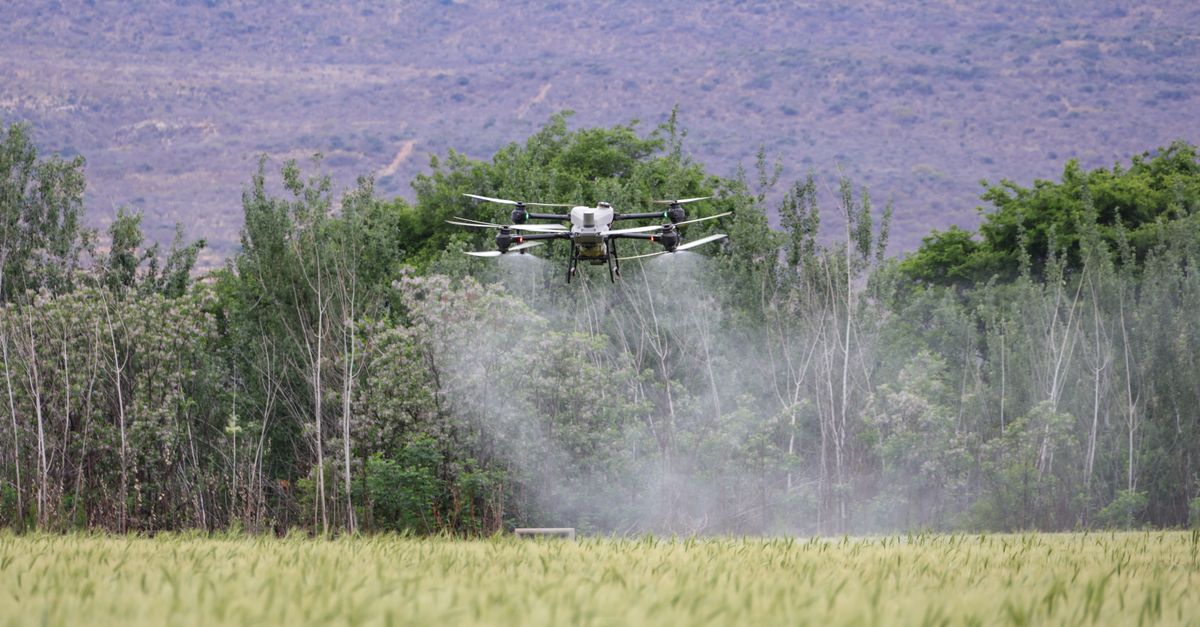
Agricultural Drones in India: From Concept to Commercial Viability

The Shift from Manual to Aerial Precision in Indian Agriculture
Indian agriculture stands at a critical inflection point. With labor shortages rising and the cost of manual spraying increasing, the adoption of Unmanned Aerial Vehicles (UAVs) for crop protection and precision application is moving from pilot programs to commercial deployment. However, not all drone claims equate to operational reality. RobotWale’s analysis prioritizes hardware that has shipped, pilots that have deployed, and regulatory clearances that are currently active, rather than press conference announcements.
The transition is driven by the 'Drone Shakti' initiative and the UAS Policy 2023, which opened the skies for commercial use. Yet, the economic case remains the deciding factor. A drone must demonstrate a return on investment (ROI) within 12 to 18 months to justify the capital expenditure (CapEx) for a typical smallholder or cooperative.
This article evaluates the current landscape, focusing on established hardware like the DJI Agras series and Indian manufacturers such as Garuda Aerospace. We examine the regulatory environment under the Directorate General of Civil Aviation (DGCA) and the financial realities of landed costs in India.
Global Heavyweights: DJI Agras Series Analysis
DJI remains the dominant player in the Indian agricultural drone market, specifically through its Agras series. The T30 and T40 models are widely available in India, supported by a robust service network. These are not concept renders; they are functional, shipping units used in states like Punjab, Haryana, and Maharashtra.
T30 Specifications: The DJI Agras T30 features a 12-liter tank capacity and can spray at a rate of 4 kg/min. It utilizes RTK positioning for centimeter-level accuracy, essential for variable rate spraying. The spray boom spans 2.6 meters, covering significant ground speed per pass.
T40 Capabilities: The newer T40 model increases the payload to 20 liters and offers dual spraying modes (liquid and solid granular). This versatility allows farmers to switch between pesticide spraying and fertilizer application without changing hardware.
Pricing and Availability: While exact pricing fluctuates with import duties and distributor margins, the landed cost for a DJI Agras T30 typically ranges between ₹18 lakhs and ₹22 lakhs. The T40 commands a higher price, often exceeding ₹25 lakhs. These figures include the standard battery set and controller but may exclude additional spare batteries required for continuous operation.
Operational Reality: The T30/T40 systems require a dedicated pilot. While the drone can operate autonomously based on pre-set flight paths, the pilot must manage the spray flow, nozzle clogs, and battery swaps. The battery life is critical; a single charge typically supports 10 to 15 minutes of active spraying, meaning a full tank requires multiple cycles. This operational constraint impacts the total acreage one pilot can cover in a day.
The Indian Contender: Garuda Aerospace and Local Manufacturing
Garuda Aerospace Pvt. Ltd. (GAPL) represents the push for indigenization under the 'Make in India' initiative. Unlike pure hardware manufacturers, Garuda operates as a service provider and manufacturer, often focusing on large-scale deployment contracts.
Hardware Deployment: Garuda has deployed drones for pesticide spraying in partnership with the Indian Railways and various state agriculture departments. Their focus is on high-volume, large-scale application rather than just smallholder ownership. They utilize a fleet of UAVs capable of spraying up to 20 liters per minute in specific configurations.
Service Model: A key differentiator for Garuda is the 'spraying as a service' (SaaS) model. Instead of requiring a farmer to purchase a ₹20 lakh drone, they offer spraying services at a competitive rate per acre. This lowers the entry barrier significantly, allowing farmers to access the technology without the CapEx risk.
Challenges for Local Startups: While Garuda has achieved pilot deployments, the broader ecosystem for Indian agri-drone startups faces hurdles. Manufacturing drones in India involves sourcing electronics from China, which subjects the final product to import duties on components. This makes the 'local' price point competitive only through economies of scale that many startups have not yet achieved.
Other Players: Companies like Swaraj Robots and Agnik Drone Technologies are also active in the sector. Swaraj focuses on swarm technology for large field coverage, while Agnik emphasizes low-cost, high-payload solutions. However, independent verification of their shipping volumes remains lower compared to DJI’s established market presence.
Regulatory Hurdles: DGCA and UAS Policy 2023
The regulatory framework governs the viability of the market. The DGCA’s 'Digital Sky Platform' is the central hub for all drone-related permissions. For agricultural drones, the following requirements are mandatory:
- Unique Identification: Every drone must be registered with a UIN (Unique Identification Number) and a digital ID.
- Pilot Licensing: Pilots must hold a Remote Pilot License (RPL) specific to the aircraft category. For agricultural drones, this often falls under the 'Unregistered' or 'Specific' category depending on weight and usage.
- No-Fly Zones: Operations near airports, strategic installations, and international borders are strictly prohibited. The DGCA provides a restricted zone map on the Digital Sky Platform.
- Insurance: Third-party insurance is mandatory. The cost of this insurance adds to the operational expenditure (OpEx).
The UAS Policy 2023 has liberalized the 'no-fly zone' concept for agricultural use in general zones, provided the flight path does not exceed 400 feet (120 meters) AGL (Above Ground Level). However, the approval process for each flight location can still be bureaucratic, requiring prior permission from local District Magistrates in some cases.
Compliance Reality: While the policy is progressive, the enforcement varies by state. In Punjab and Haryana, the state agriculture departments often coordinate with DGCA to facilitate bulk spraying permits. In other states, the lack of clarity on 'no-fly' zones near airports can halt operations.
Economic Viability: Pricing, Subsidies, and ROI
The financial case for agricultural drones hinges on three variables: equipment cost, operational cost, and subsidy support.
Subsidy Schemes: The Government of India, under the Sub-Mission on Agricultural Mechanization (SMAM), offers subsidies ranging from 40% to 50% for agricultural drones. This is applicable to Farmer Producer Organizations (FPOs) and individual farmers. The subsidy is often paid directly to the manufacturer or through a reimbursement model. This brings the effective cost down to approximately ₹10 lakhs for a DJI T30 in some cases.
Cost Per Acre: Manual spraying costs roughly ₹3,000 to ₹5,000 per acre depending on terrain and labor availability. Drone spraying typically ranges between ₹1,500 and ₹3,000 per acre when using service providers. For equipment ownership, the ROI is calculated based on the number of acres covered per season.
Maintenance and OpEx: A drone is not a one-time purchase. Battery degradation is a primary concern. Lithium-polymer batteries typically last 300 to 500 charge cycles. A full set of batteries for a DJI Agras can cost ₹40,000 to ₹60,000 and needs replacement every 18 to 24 months. Additionally, spare parts like nozzles, motors, and propellers require regular replacement due to chemical corrosion and wear.
Weather Dependency: Agricultural drones are highly sensitive to weather. Wind speeds above 20 km/h can disrupt spray patterns and lead to drift. Rain can damage electronics. This means the drone is not operational 24/7, reducing its annual utilization rate to approximately 60% in many regions.
Conclusion: The Path to Commercial Scale
The agricultural drone sector in India is transitioning from hype to hardware. DJI’s Agras series provides the most reliable hardware currently available, with clear documentation and service support. However, the high entry cost (₹15-25 lakhs) limits widespread adoption among smallholders without subsidy support.
Indian startups like Garuda Aerospace offer a viable alternative through service models, bypassing the CapEx barrier. Their success depends on securing large-scale contracts with government bodies and FPOs. The regulatory environment is improving, with the DGCA’s Digital Sky Platform providing a clear framework for compliance.
For investors and farmers, the recommendation is pragmatic. Avoid companies that only release concept renders. Verify shipping records, check for active DGCA registrations, and calculate the ROI based on actual operational hours rather than theoretical maximums. The market is maturing, but the 'silver bullet' for Indian agriculture remains a combination of technology, policy, and economic viability.
As the UAS Policy evolves and manufacturing scales, the cost per acre is expected to drop further. Until then, the drone remains a tool for precision and efficiency, not a replacement for the human labor that remains essential for harvest and manual tasks.
✓ Key takeaways
- •Hands-on view of Agricultural Drones in India: From Concept to Commercial Viability inside our Agricultural Drones library.
- •Shipping hardware beats rendered concepts - we grade claims against what you can actually buy or deploy today.
- •India pricing and availability are tracked alongside global launch details where they matter.
References
Related articles
More in Agricultural Drones →