Nvidia Isaac Ecosystem: Simulation, Reinforcement Learning, and Humanoid Imitation

The Nvidia Isaac Ecosystem: Software Defined Robotics
The robotics industry often struggles to bridge the gap between simulation fidelity and physical deployment. Nvidia’s Isaac platform attempts to solve this through a unified software stack that integrates simulation, reinforcement learning, and deployment. Unlike many robotics startups that rely on proprietary simulators or open-source ROS stacks alone, Isaac leverages the Omniverse platform to create digital twins of physical environments. This article evaluates the ecosystem based on a hierarchy of evidence: shipping hardware first, pilot deployments second, and announcements last.
Isaac Sim: The Digital Twin Reality
Isaac Sim is a high-fidelity physics simulator built on Omniverse. It uses the PhysX physics engine and supports photorealistic rendering via RTX. While many competitors offer rendering-only tools, Isaac Sim emphasizes the physics fidelity required for robot training. It supports NVIDIA’s Isaac Perceptor for perception tasks and Isaac Sim’s control APIs for robotics.
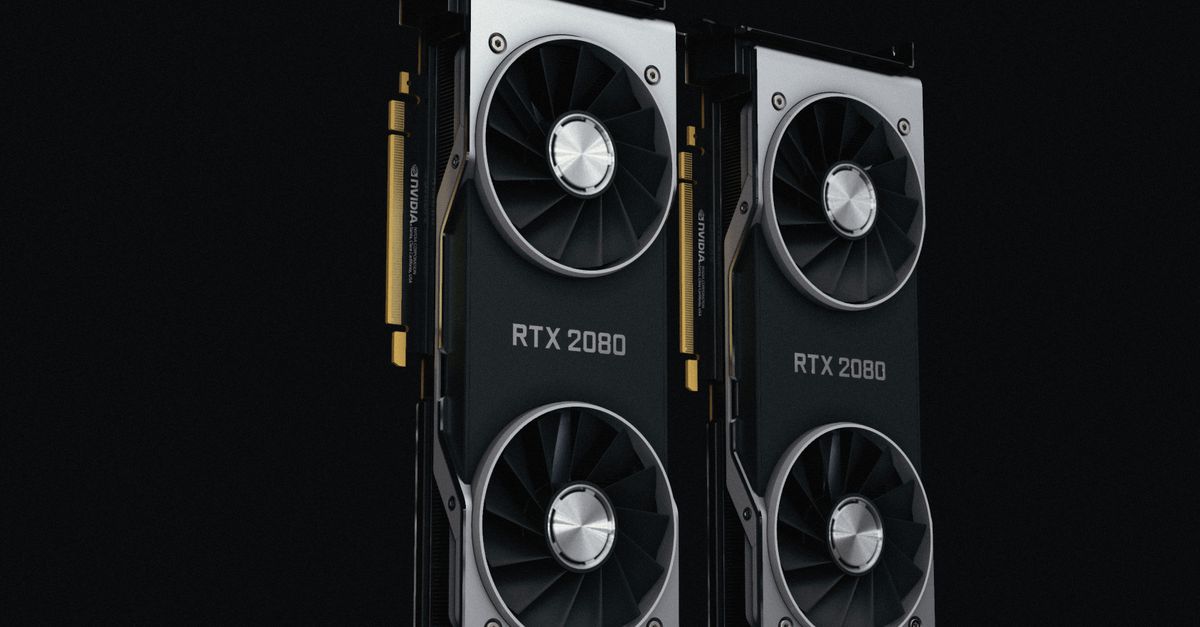
The hardware requirement for Isaac Sim is significant. To run simulations at a useful scale, developers require multi-GPU workstations. The recommended configuration typically includes an NVIDIA RTX 6000 Ada Generation GPU or an H100. For enterprise-level simulation farms, the DGX Station or DGX SuperPOD is often cited as the standard infrastructure.
Isaac Sim is currently shipping software. It is available via the Nvidia Developer Program for personal use and through enterprise licenses for commercial deployment. Pilot deployments exist within automotive and logistics sectors where digital twins are used for warehouse layout optimization before hardware installation. However, full autonomous navigation in unstructured environments remains a pilot-stage challenge rather than a mass-market product.
Isaac Lab: Bridging Simulation to Reality
Isaac Lab is a framework designed for reinforcement learning (RL) and imitation learning. It provides a set of modular environments for training robots in simulation before testing them on real hardware. Unlike traditional RL frameworks that require custom physics integration, Isaac Lab offers pre-built environments for common robotics tasks like manipulation and locomotion.
Key technical features include:
- Support for MuJoCo and PhysX backends.
- Integration with PyTorch for RL algorithm training.
- Transfer learning capabilities from simulation to real-world robots.
The open-source nature of Isaac Lab allows for community contribution, but the production readiness depends on the robotics hardware integration. Nvidia maintains a list of supported robots, including units from Figure, Tesla Optimus (via partnership announcements), and custom manipulators from partners like Universal Robots. While the software ships, the physical deployment relies on the partner’s hardware supply chain.
For Indian developers, the barrier to entry is the compute cost. Running RL training on Isaac Lab requires significant GPU compute. Without access to DGX systems, developers often rely on cloud instances from AWS or Azure, which charge per hour for H100 or A100 instances. This operational expenditure can be prohibitive for startups without Series B funding.
Project Groot: Humanoid Imitation Learning
Project Groot is the newest addition to the Isaac ecosystem, focusing on humanoid imitation learning. It allows developers to train humanoid robots to mimic human motion using motion capture data. The system creates a policy that can adapt to the robot’s physical constraints and the environment.
Groot represents a shift from rule-based programming to data-driven learning. However, the data requirements are high. To train a humanoid using Groot, a developer needs access to motion capture systems or high-fidelity depth sensors to record human movements. The training phase requires substantial compute, typically running on multi-GPU clusters.
Deployment status varies. While the software stack is available for developers to download, the actual deployment of humanoids trained via Groot is mostly in the pilot stage. Humanoid hardware capable of running these policies is not yet mass-produced. Companies like Figure AI have demonstrated humanoid capabilities, but widespread commercial availability remains limited. In India, humanoids are currently restricted to research labs and university pilots.
India Market: Access, Pricing, and Partners
The adoption of the Nvidia Isaac ecosystem in India is tied directly to hardware availability and cost. Unlike US-based robotics companies that can purchase DGX systems directly, Indian entities often rely on distributors or cloud partners.
Hardware Costs:
- Workstations: An RTX 6000 Ada workstation costs approximately INR 15 to 20 lakhs. This is a capital expenditure that limits access to large enterprises or well-funded research labs.
- DGX Systems: A DGX Station or DGX SuperPOD can range from INR 1 crore to over INR 10 crores, depending on configuration. These are enterprise-grade deployments.
- Cloud: AWS and Azure offer H100 instances in Mumbai regions. Rates vary but can exceed INR 800 per hour for high-end compute.
Partners and Availability:
Nvidia partners with major Indian IT firms for deployment. Companies like HCL and Tata Consultancy Services have expressed interest in Omniverse for digital twin solutions. However, dedicated robotics distributors for Isaac Sim specific hardware are sparse. Developers often source GPUs through authorized channels like CDW or local system integrators.
Licensing:
Personal use of Isaac Sim and Isaac Lab is free for research. Commercial use requires an Enterprise License. While the specific INR pricing for enterprise licenses is not public, it is comparable to other enterprise robotics software suites, often starting at INR 50 lakhs annually for small deployments.
Conclusion: Shipping Hardware vs. Software Promises
The Nvidia Isaac ecosystem is a powerful tool for robotics development, but it is not a magic solution. Isaac Sim and Isaac Lab are shipping software that requires significant hardware investment to utilize effectively. Project Groot shows promise for humanoid training but relies on data availability and hardware that is not yet ubiquitous.
For Indian stakeholders, the path forward involves cloud-based simulation to mitigate hardware costs, followed by on-premise deployment for pilot projects. The hierarchy of adoption remains clear: simulation software ships today, pilot deployments are happening now, and mass-market hardware availability is the next milestone.
References
✓ Key takeaways
- •Hands-on view of Nvidia Isaac Ecosystem: Simulation, Reinforcement Learning, and Humanoid Imitation inside our Nvidia Isaac library.
- •Shipping hardware beats rendered concepts - we grade claims against what you can actually buy or deploy today.
- •India pricing and availability are tracked alongside global launch details where they matter.
References
Related articles
More in Nvidia Isaac →