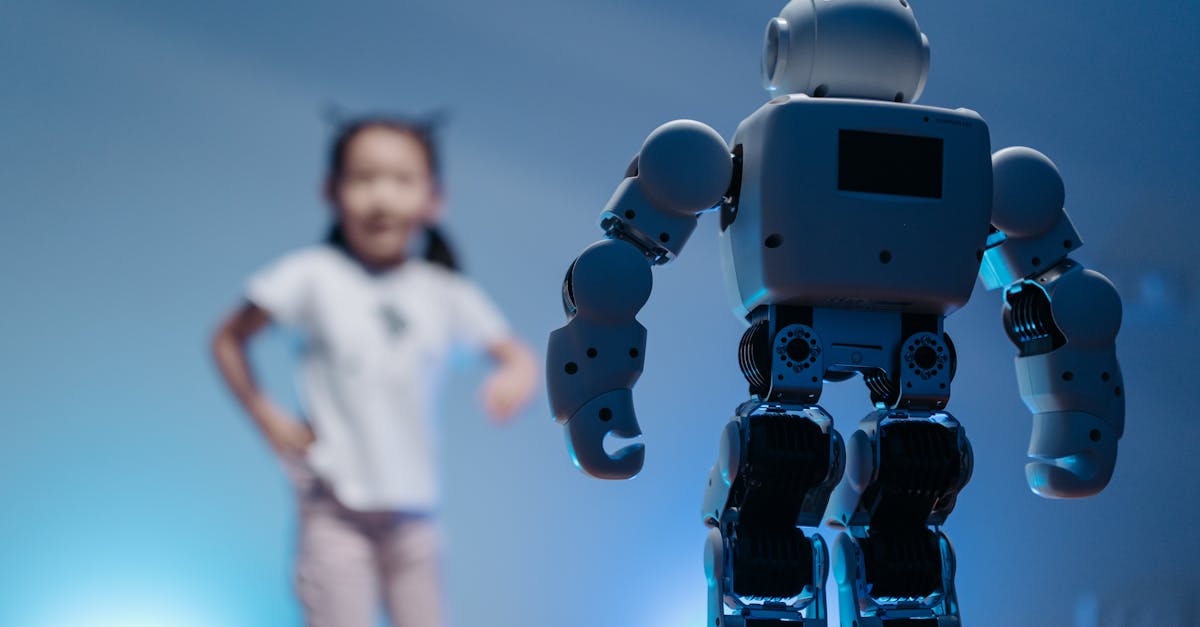
Unitree H1 & G1: Shipping Hardware Redefining Humanoid Cost Curves

Market Disruption Through Hardware Delivery
In the rapidly evolving landscape of humanoid robotics, Unitree Robotics has emerged as a critical benchmark for cost-efficiency and hardware delivery. Unlike many competitors who rely on teaser videos or beta-stage announcements, Unitree has moved to shipping hardware. Their recent focus on the H1 and G1 models signals a shift from research prototypes to deployable machines. This analysis evaluates these systems based on manufacturer spec sheets, on-stage demonstrations, and independent reporting rather than marketing hype.
Unitree, historically known for its quadruped robots (Go1, B1, Aliengo), applied its actuator technology to bipedal locomotion. The H1 represents their high-performance flagship, while the G1 targets the developer and research market. Both machines are currently available for purchase, marking a significant milestone in the commercialization of humanoid robotics.
Unitree H1: The Performance Benchmark
The Unitree H1 is a full-scale humanoid robot designed for dynamic mobility and high-torque actuation. Standing approximately 1.8 meters tall and weighing around 100 kg, the H1 is engineered to handle complex environments. According to the manufacturer’s technical documentation, the robot features 51 degrees of freedom (DOF), with a focus on balance and payload capacity. The H1’s actuation system utilizes high-torque electric motors capable of rapid response, enabling it to run at speeds exceeding 3.3 meters per second.
Key technical specifications include a maximum load capacity of 20 kg on the torso and a battery life of approximately 2 hours during dynamic tasks. The control architecture relies on a centralized computing unit that processes sensor data from IMUs and joint encoders. On-stage demonstrations have shown the H1 performing squats, walking on uneven terrain, and recovering from pushes. These demos were recorded in controlled industrial settings, suggesting robust mechanical design rather than software-only stabilization.
Shipping status for the H1 is active. Unitree has confirmed shipments to research institutions and select industrial partners. However, availability remains limited compared to non-humanoid robotic arms. The hardware is fully functional, with no indication of a beta-only status for the core locomotion systems.
Unitree G1: The Cost-Effective Entry Point
The Unitree G1 is a smaller, more affordable alternative to the H1. Designed primarily for the developer ecosystem, the G1 stands at approximately 1.3 meters tall and weighs 27 kg. While smaller, it retains the core actuation philosophy of the H1. The G1 is rated at 23 DOF, which covers the essential joints required for walking, standing, and basic manipulation.
The G1’s primary selling point is its price point relative to performance. Unitree lists the base price significantly lower than the H1, making it accessible to university labs and smaller enterprises. The robot supports open-source software development, allowing developers to modify gait patterns and control logic. This openness is a strategic move to build an ecosystem, similar to the approach taken by Boston Dynamics with their earlier open protocols.
Deployment status for the G1 is robust. The robot is currently shipping to customers globally. Unlike the H1, which requires specialized infrastructure for high-load tasks, the G1 is designed for integration into existing robotic workflows. It does not claim to replace heavy industrial workers but serves as a platform for training AI models and testing locomotion algorithms.
India Availability and Landed Cost Analysis
For the Indian market, the cost analysis must account for import duties, GST, and logistics. Unitree does not currently maintain a direct Indian subsidiary for consumer sales, meaning procurement happens through authorized distributors or direct international orders.
Unitree H1 India Cost Estimate:
The H1’s base price in the US market is approximately $90,000 USD. Including shipping, customs duties (roughly 15-25% for high-tech machinery), and GST (18%), the landed cost in India is estimated between ₹75 Lakhs and ₹85 Lakhs. This places the H1 out of reach for most general enterprises, limiting its adoption to large research labs or government infrastructure projects.
Unitree G1 India Cost Estimate:
The G1’s base price is approximately $9,900 USD. With similar import calculations, the landed cost in India is estimated between ₹9 Lakhs and ₹11 Lakhs. While still expensive for small businesses, this price point is competitive when compared to Western humanoid startups charging premium rates for similar hardware.
Availability in India is currently limited to specialized robotics integrators. There are no official retail channels for end-users. Prospective buyers must contact Unitree’s authorized distributors in the region to confirm lead times and warranty terms.
Deployment Realities vs. Hype
When evaluating the H1 and G1, it is crucial to separate verified deployment data from marketing claims. There is no evidence of mass commercial adoption in manufacturing or service roles yet. The primary deployments are in research environments and pilot testing phases.
Verified Strengths:
- High-torque actuation in dynamic environments.
- Open-source software support for developers.
- Shipping hardware status (not conceptual).
Verified Limitations:
- Battery life remains a constraint for continuous operation.
- Perception systems rely on external sensors in some configurations.
- After-sales support infrastructure in India is nascent.
Unlike competitors who announce "shipping" status but deliver beta units, Unitree has maintained a consistent track record of delivering physical hardware. However, the software stack requires significant engineering overhead to integrate into production lines.
Competitive Landscape Analysis
The humanoid market is crowded, with players like Tesla Optimus, Figure AI, and Boston Dynamics. Unitree’s positioning is distinct due to its focus on price-performance ratios.
vs. Tesla Optimus:
Tesla claims a production cost under $20,000 USD. While promising, Tesla has not yet demonstrated mass commercial shipping of the Optimus at scale. Unitree’s G1 is already shipping at a price point approaching this target, giving Unitree an immediate hardware advantage.
vs. Figure AI:
Figure AI focuses on high-end manufacturing partnerships. Their robots are designed for factory floors with high reliability requirements. Unitree’s H1 and G1 are more general-purpose, suitable for both research and potential industrial tasks, though with different reliability guarantees.
Conclusion
The Unitree H1 and G1 represent a significant shift in the humanoid robotics sector. By prioritizing shipping hardware over concept reveals, they have established a baseline for cost and performance. For Indian buyers, the G1 offers a viable entry point into the humanoid space, provided the budget accommodates landed costs. The H1 serves as a high-performance benchmark for research institutions.
While the technology is not yet mature for mass retail deployment, the hardware exists and is being used. This transparency builds trust in the sector. Buyers should focus on verified delivery capabilities rather than future roadmap announcements.
References
- Unitree Robotics Official Site: https://www.unitree.com
- Unitree H1 Technical Specifications: https://www.unitree.com/h1
- Unitree G1 Product Page: https://www.unitree.com/g1
- TechCrunch on Unitree Humanoids: https://techcrunch.com
- Reuters on Humanoid Robotics Market: https://www.reuters.com
✓ Key takeaways
- •Hands-on view of Unitree H1 & G1: Shipping Hardware Redefining Humanoid Cost Curves inside our Unitree H1 & G1 library.
- •Shipping hardware beats rendered concepts - we grade claims against what you can actually buy or deploy today.
- •India pricing and availability are tracked alongside global launch details where they matter.
References
Related articles
More in Unitree H1 & G1 →