
The Post-AGV Shift: AMRs Redefining Warehouse Automation
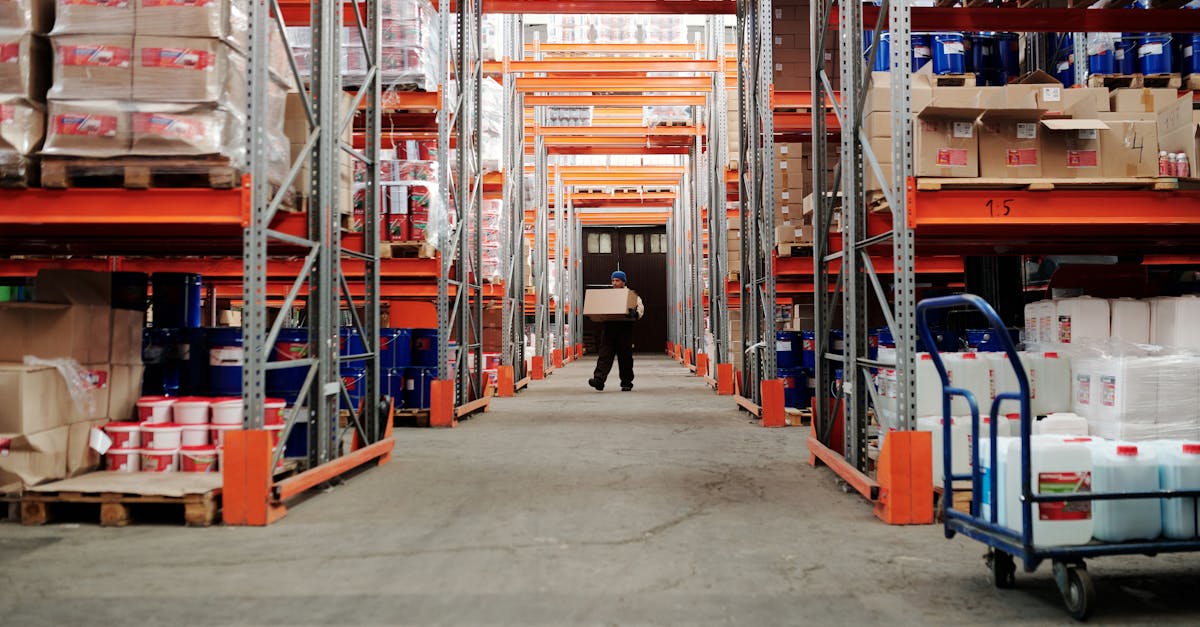
The Post-AGV Shift: AMRs Redefining Warehouse Automation
Autonomous mobile robots have moved from laboratory prototypes to deployed material-handling assets, yet the industry remains divided between shipped hardware and marketing timelines. The post-AGV generation of warehouse automation relies on fleet-managed AMRs that navigate without fixed magnetic tape or wired guidance. Instead, these systems use simultaneous localization and mapping (SLAM), stereo vision, and LiDAR to operate in dynamic environments. The shift from rigid infrastructure to software-defined routing has reduced facility retrofit costs, but it has also introduced new integration constraints that only become visible after months of pilot operation.
Warehouse operators evaluating AMRs must separate three categories of claims: shipped hardware with verified throughput, pilot deployments with measured uptime, and press releases outlining roadmap features. Shipping hardware demonstrates mechanical reliability, battery management, and navigation stability under load. Pilot deployments reveal fleet management software behavior, charging infrastructure compatibility, and human-robot interface safety. Announcements, while useful for tracking R&D direction, do not reflect current operational capability.
Navigating Without the Guide: SLAM, Vision, and Fleet Logic
Traditional AGVs followed predefined paths. Post-AGV AMRs calculate routes in real time using onboard sensors and cloud-based fleet orchestration. The navigation stack typically combines LiDAR point clouds, inertial measurement units, and wheel odometry to maintain sub-centimeter positioning. Vision-based AMRs use depth cameras and semantic mapping to identify pallets, conveyors, and dock doors. The choice of sensor suite depends on facility lighting, reflective surfaces, and dust conditions.
Fleet management software assigns tasks, balances battery levels, and resolves traffic conflicts. Multi-robot systems require dynamic path planning that prevents deadlocks while maintaining throughput targets. Operators must verify that the orchestration layer supports their warehouse management system (WMS) and warehouse execution system (WES) through documented APIs, not just partnership announcements. Successful deployments show synchronized task allocation, automated charging handoffs, and telemetry that tracks cycle time, navigation errors, and collision avoidance triggers.
Payload Classes and Form Factors That Actually Ship
Warehouse AMRs fall into distinct payload categories, each engineered for specific operational cycles. Towing AMRs pull carts or trailers across receiving docks and staging areas. Payload ranges typically span 1,000 to 5,000 kg, with top speeds limited to 1.5 to 2.0 m/s for safety. Conveyer-integrated AMRs lift and transport roller or belt sections, enabling flexible sortation lines. These units handle 200 to 800 kg payloads and require precise alignment tolerances to interface with existing infrastructure.
Unit-load AMRs carry pallets or totes between storage racks and packing stations. Payload capacities range from 300 to 1,500 kg, with lifting heights up to 1.8 meters. Shelving AMRs navigate narrow aisles to retrieve single items or small batches, often using telescopic forks or roller beds. Payload limits sit between 50 and 300 kg, prioritizing maneuverability over raw carrying capacity. Each class requires different battery chemistry, motor torque curves, and safety fencing protocols. Operators should request factory test videos and third-party performance reports that measure acceleration, braking distance, and battery recovery time under continuous duty cycles.
Shipping Hardware vs. Announcements: Grading the Claims
Grading AMR vendors requires a strict hierarchy of evidence. Shipping hardware ranks highest because it proves manufacturing scalability, component sourcing, and field service support. Pilot deployments rank second, demonstrating software stability and operational integration. Announcements rank last, as they often describe features that remain in engineering validation.
Several manufacturers have shipped tens of thousands of units globally, with documented deployment records in e-commerce fulfillment, third-party logistics, and manufacturing distribution. These fleets operate in high-temperature environments, cross-dock facilities, and multi-shift operations. Pilots reveal how AMRs handle uneven flooring, temporary obstructions, and peak-season throughput spikes. Announcements frequently highlight AI-driven predictive routing or autonomous inventory scanning, but these capabilities only matter if the base navigation stack, charging infrastructure, and fleet controller are production-ready.
Operators should demand site references, uptime reports, and cycle time data from installations that have operated for at least six months. Vendors that cannot provide post-deployment telemetry or maintenance logs are likely still in the pilot phase, regardless of marketing materials. The warehouse sector rewards reliability over novelty.
India Availability and Landed Cost Estimates
India's warehouse automation market has shifted from manual handling to semi-automated and fully autonomous systems. AMR availability in India includes both imported fleets and domestically assembled units. Imported AMRs from established global manufacturers arrive through certified channel partners, with lead times spanning eight to twelve weeks. Domestic manufacturers offer faster deployment cycles and localized service networks.
Approximate INR pricing for warehouse AMRs in India varies by payload class and navigation architecture. Towing AMRs typically range between ₹18 lakhs and ₹32 lakhs per unit. Conveyer-integrated and unit-load AMRs fall between ₹22 lakhs and ₹38 lakhs. Shelving and item-picking AMRs cost ₹12 lakhs to ₹25 lakhs. These figures represent base hardware pricing and do not include fleet management licenses, charging stations, or facility integration. Landed cost estimates for imported units, including customs, GST, and freight, generally add 18 to 24 percent to the base price. Domestic assemblies avoid import duties but may carry higher software subscription fees. Operators should request detailed cost breakdowns that separate hardware, software licensing, installation, and annual maintenance contracts.
Integration, Pilots, and the Post-Deployment Reality
AMR deployment requires careful facility preparation. Floor load-bearing capacity, surface flatness, and dock clearances must meet manufacturer specifications. Charging infrastructure must align with fleet size and shift patterns. Wireless network coverage requires redundant access points to prevent communication dropouts during navigation. Integration with existing WMS and WES platforms demands validated API documentation and data mapping protocols.
Pilot deployments typically run for three to six months before full rollout. During this phase, operators measure task completion rates, battery utilization, navigation recalibration frequency, and safety incident logs. Successful pilots show consistent throughput, minimal manual intervention, and predictable maintenance intervals. Post-deployment realities include firmware update schedules, spare parts availability, and operator training requirements. Facilities that treat AMRs as plug-and-play assets often face extended downtime. Those that invest in integration planning, staff training, and vendor SLA alignment achieve measurable ROI within twelve to eighteen months.
The post-AGV generation of warehouse automation has matured beyond concept demos. Shipped hardware demonstrates mechanical and software reliability. Pilots reveal operational constraints and integration requirements. Announcements track future capabilities but do not replace deployment data. Warehouse operators who grade vendors by shipped units, validated pilots, and transparent pricing will avoid procurement risks and secure long-term automation value.
References
- Geek+ Official Site and Product Specifications: https://www.geek-plus.com/
- MIR (KUKA) Autonomous Mobile Robots Fleet Documentation: https://www.mir.com/
- Locus Robotics Deployment Reports and Fleet Management Overview: https://www.locusrobotics.com/
- InoLab Robotics India Warehouse AMR Solutions: https://www.inolab.in/
- Wobot Robotics Autonomous Material Handling Systems: https://wobot.ai/
- Interact Analysis Warehouse Robotics Market Reports: https://www.interact-analysis.com/
- Economic Times India Automation and Robotics Sector Coverage: https://economictimes.indiatimes.com/
✓ Key takeaways
- •Hands-on view of The Post-AGV Shift: AMRs Redefining Warehouse Automation inside our AMRs in Warehouses library.
- •Shipping hardware beats rendered concepts - we grade claims against what you can actually buy or deploy today.
- •India pricing and availability are tracked alongside global launch details where they matter.
References
- Geek+ Official Site and Product Specifications
- MIR (KUKA) Autonomous Mobile Robots Fleet Documentation
- Locus Robotics Deployment Reports and Fleet Management Overview
- InoLab Robotics India Warehouse AMR Solutions
- Wobot Robotics Autonomous Material Handling Systems
- Interact Analysis Warehouse Robotics Market Reports
- Economic Times India Automation and Robotics Sector Coverage
Related articles
More in AMRs in Warehouses →
