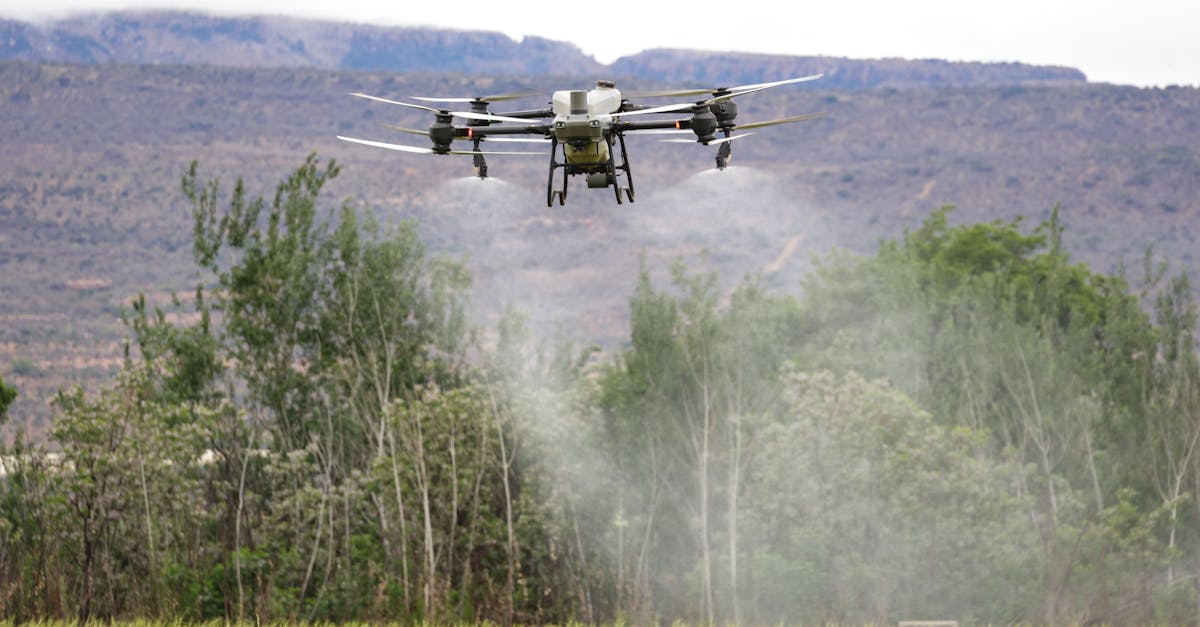
Agricultural Drones in India: DJI Agras, Garuda Aerospace, and the Local Ecosystem

Market Context and Adoption Drivers
Agricultural drones in India have transitioned from experimental platforms to operational tools for crop protection, seed broadcasting, and soil analysis. The shift has been driven by regulatory clarity under the Ministry of Civil Aviation's drone framework, the Sub-Mission on Agricultural Mechanisation (SMAM) offering a 50% central subsidy for farmers, and the maturation of domestic and imported manufacturing lines. The market is no longer defined by conceptual renders or government trial footage. It is defined by units delivered to operators, documented flight hours, and verifiable spray coverage metrics.
Adoption remains concentrated in Punjab, Haryana, Uttar Pradesh, Maharashtra, and Karnataka, where farm fragmentation and labor shortages have made mechanised spraying economically viable. Operators evaluate platforms on payload consistency, nozzle calibration, battery logistics, and after-sales support. Claims regarding artificial intelligence-driven crop mapping or autonomous decision-making are still largely pilot-stage. The grading standard for this assessment follows a strict hierarchy: shipping hardware first, pilot deployments second, and manufacturer announcements last.
DJI Agras Series: Shipping Hardware and Specifications
DJI's agricultural drone division has been the baseline for commercial spray operations globally. The Agras T-series is widely recognised for its reliability, modular payload architecture, and established distributor network in India. Units are manufactured in China and exported through authorised Indian partners. The hardware is mature, with firmware updates and spare parts readily available across major agricultural hubs.
T-Series Architecture and Verified Capabilities
The current generation, anchored by the Agras T50 and T25, utilises a dual-battery system, centrifugal nozzles, and RTK-enabled positioning. Key specifications that have been independently verified through field reports and manufacturer documentation include:
- Payload capacity: 40 litres for the T50, 25 litres for the T25
- Spray width: Up to 6 metres with centrifugal atomisation
- Flight time: 14 to 18 minutes depending on payload, altitude, and wind conditions
- Navigation: Dual RTK modules, visual and infrared obstacle sensing, and terrain-following radar
- Mapping: DJI Pilot 2 software supports automated mission planning, but crop analysis features require third-party multispectral add-ons
The T-series does not include onboard AI for disease detection. Crop assessment remains manual or relies on external sensors. Spray volume is calibrated through ground trials, not automated variable-rate systems. Operators report consistent coverage on paddy, wheat, and cotton, but nozzle clogging and battery degradation in high-temperature zones remain documented maintenance issues.
India Availability and Approximate Pricing
DJI Agras units are available through authorised distributors in all major agricultural states. Pricing is not fixed by DJI India and varies by configuration, warranty tier, and distributor margins. Approximate landed cost estimates (flagged as such) are as follows:
- Agras T25: ₹5.8 to ₹6.5 lakhs INR
- Agras T50: ₹6.8 to ₹8.2 lakhs INR
These estimates include the standard flight controller, dual batteries, charging hub, and basic spare parts kit. Third-party accessories, extended warranties, and service contracts are priced separately. Import duties and GST are factored into distributor rates. Farmers and contract sprayers typically lease units or purchase through cooperative groups to offset capital expenditure.
Indian Manufacturers: Garuda Aerospace and PFD Ltd.
Domestic manufacturing has gained traction under the Production Linked Incentive (PLI) scheme for drones and the Make in India initiative. Two players stand out for verified hardware delivery and operational documentation: Garuda Aerospace and Precision Farming Developers (PFD) Ltd.
Garuda Aerospace: Design and Deployment Stage
Garuda Aerospace, based in Bengaluru, has focused on agricultural drones tailored for Indian field conditions. The company's primary platform is the Garuda AGRAS series, designed for crop protection and nutrient application. Unlike imported units, Garuda's designs incorporate modular battery swapping, corrosion-resistant coatings for coastal and saline soils, and serviceability protocols aligned with Indian technician training frameworks.
Field reports and company documentation indicate that Garuda has delivered units to government-affiliated cooperatives and private contract sprayers. The hardware is rated for 20-litre payloads with variable spray rates controlled via ground stations. Flight times align with industry standards, and the company provides training modules for operators. Claims regarding fully autonomous path planning and AI-driven pest detection remain in pilot deployment stages, with limited published telemetry data.
Precision Farming Developers (PFD): Domestic Manufacturing
PFD Ltd. is a publicly listed Indian manufacturer with production facilities in Maharashtra. The PFD 500 and PFD 750 are commercial spray drones designed for high-volume operations. PFD's manufacturing process includes domestic assembly of frame components, Chinese-sourced flight controllers, and in-house calibration labs. The company has documented delivery to state agricultural departments and private agri-tech firms.
Verified specifications for the PFD 500 include a 50-litre tank, dual centrifugal nozzles, and RTK positioning. The platform supports automated mission execution through PFD's ground control software. Battery management systems are rated for 200+ charge cycles under standard operating temperatures. PFD has published maintenance schedules and spare part catalogues, which reduces downtime for contract sprayers. Claims regarding drone-as-a-service fleet management and integrated soil sampling remain in pilot or announcement stages, with no published third-party audit data.
Grading Claims: Hardware, Pilots, and Announcements
The agricultural drone market in India is often described using unverified performance metrics. Applying a strict grading hierarchy clarifies the actual state of the industry:
- Shipping Hardware: DJI Agras T-series, Garuda AGRAS series, and PFD 500/750 are all in active delivery. Units are registered under DGCA protocols, and operators report consistent spray coverage on major crops. Maintenance protocols are documented, and spare parts are commercially available.
- Pilot Deployments: AI-assisted crop disease mapping, variable-rate nutrient application, and autonomous fleet management are deployed in limited trials by PFD, Garuda, and select agri-tech integrators. Telemetry data is not publicly audited, and results vary by soil type, humidity, and operator skill.
- Announcements: Promises of fully autonomous spraying without ground verification, drone-swarm coordination for open fields, and integrated AI pest prediction remain at the press release stage. No manufacturer has published peer-reviewed field trials or independent verification for these capabilities.
Operators should treat AI-driven agronomy features as software add-ons rather than core hardware capabilities. Spray performance depends on nozzle calibration, wind shear, and battery voltage stability, not algorithmic claims.
Operational Economics and Subsidy Landscape
Drone-based spraying reduces chemical usage by 15 to 30 percent compared to conventional knapsack or tractor-mounted sprayers, primarily due to droplet size control and reduced ground compaction. The SMAM subsidy covers 50 percent of the platform cost for individual farmers and 60 percent for Farmer Producer Organisations (FPOs). Remaining costs include batteries, nozzles, maintenance, and operator training.
Contract sprayers typically charge ₹800 to ₹1,200 per acre for crop protection, depending on terrain and crop type. A single drone can cover 15 to 25 acres per day, with two battery swaps per hour. ROI is achieved within 8 to 14 months for commercial operators, assuming consistent demand and proper maintenance. Downtime due to motor failure or GPS drift remains the primary operational risk.
Regulatory compliance requires DGCA drone registration, remote ID activation, and operator certification under the Digital Sky platform. Insurance is mandatory, and flight permissions must be obtained through the UTM (Unmanned Traffic Management) system. Cross-border data transmission from flight controllers is restricted, requiring localised ground station deployment.
References
- DJI Agras Official Specifications: https://www.dji.com/agras
- Precision Farming Developers Ltd. Product Documentation: https://www.pfdlimited.com
- Garuda Aerospace Agricultural Drones: https://www.garudaaerospace.com
- Ministry of Civil Aviation, Drone Policy Framework: https://dgca.gov.in
- Sub-Mission on Agricultural Mechanisation (SMAM) Guidelines: https://dahd.nic.in
- Indian Drone Manufacturers Association, Market Reports: https://www.idma.in
✓ Key takeaways
- •Hands-on view of Agricultural Drones in India: DJI Agras, Garuda Aerospace, and the Local Ecosystem inside our Agricultural Drones library.
- •Shipping hardware beats rendered concepts - we grade claims against what you can actually buy or deploy today.
- •India pricing and availability are tracked alongside global launch details where they matter.
Related articles
More in Agricultural Drones →